Air pollution can affect your skin, but the evidence is far weaker than skincare advertising implies. Observational studies in Germany and China found that people living with heavier traffic pollution had more brown spots, and that bad-air days were followed by more doctor visits for acne and more eczema symptoms. These are associations rather than proof of cause, and none of the studies included Vietnamese people. For anyone riding a motorbike through Ho Chi Minh City, sunlight remains the far better-documented threat, and the same habits that protect against the sun and keep the skin barrier healthy are also the most useful defence against pollution.
What fine dust and traffic fumes are made of
"Fine dust" is used loosely to describe a mixture. Researchers separate it into several components, and each is suspected of doing something different:
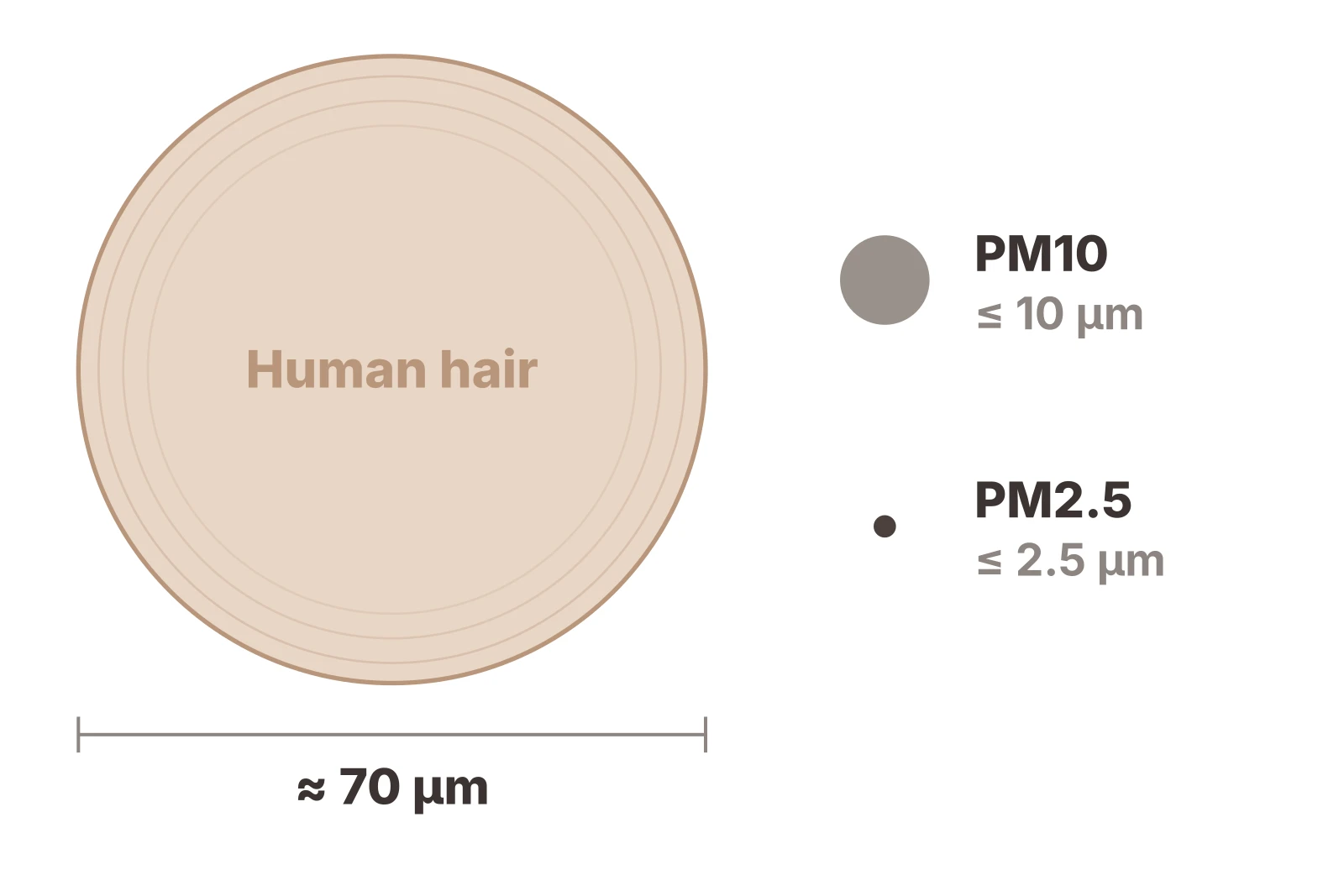
PM10 and PM2.5 particles — particles 10 and 2.5 micrometres across or smaller. A human hair is about 70 micrometres thick, roughly 30 times the size of the largest PM2.5 particle. Most fine particles are not emitted straight from exhaust pipes; they form in the air from gases released by traffic and industry.
Soot from vehicle exhaust — carbon particles that often carry polycyclic aromatic hydrocarbons (PAHs) on their surface, the compounds most often used in laboratory studies of pollution and skin cells.
Nitrogen dioxide (NO₂) — produced when engines burn fuel, and commonly used as a yardstick for how much traffic pollution an area gets.
Ground-level ozone — not emitted by anything directly. It forms when exhaust gases react in sunlight, so it tends to peak on hot, sunny days in cities.
The smaller a particle, the deeper it can travel into the lungs, which is why PM2.5 is the figure most often reported. Skin is a different matter: being small does not mean a particle can get through it, as the section below explains.
How air pollution affects skin: what studies have found
Brown spots and wrinkles
The most-cited study on this question examined 400 German women aged 70 to 80. Each step up in soot and traffic-related particles around their homes went with about 20% more pigment spots on the forehead and cheeks; the link with wrinkles was much weaker. The same research group later found that higher nitrogen dioxide levels went with more brown spots on the cheeks in both German and Chinese women. In Beijing, women aged 40 to 90 living in a polluted inner-city district had about 1.5 times as many age spots on the cheeks, and 2.8 times as many on the backs of the hands, as women in a suburban county. Ozone was different: in two groups of Germans aged 60 to 84 it went with deeper wrinkles but not with brown spots.
Three limits apply to all of these figures. Every one of these studies is cross-sectional, a snapshot in time, so it can show that two things occur together but not that one causes the other. The groups being compared often differ in other ways too: in the Beijing study, smoking, second-hand smoke and exposure to fuel smoke were also clearly linked with skin aging. And the participants were mostly older women in Germany and China; some of the studies were partly funded by cosmetics companies.
For younger people in the tropics, the data are scarce and point somewhere else. A study of 140 women aged 18 to 50 in five cities on Hainan Island in southern China found that where pollution was higher, skin lost more water, held less moisture and was less elastic, but it did not have more melanin.
Acne and eczema
In Xi'an, China, an analysis of 27,190 outpatient visits for adult acne found that each 10 µg/m³ rise in nitrogen dioxide was followed by about 3.5% more visits over the following week; for PM10 the figure was about 0.8%. In Seoul, researchers followed 177 children aged 5 or under with eczema for 17 months: on days when PM10, nitrogen dioxide or ozone rose by 10 units, the risk of symptoms went up by about 3 to 6%. These increases are small, and counting outpatient visits says nothing about how many people newly developed acne or how severe it was.
Melasma: no evidence yet
No epidemiological study has shown that air pollution causes melasma or makes it worse. The "brown spots" in the studies above are solar lentigines (age spots): flat, well-defined marks linked to age and accumulated sun exposure. They differ from melasma in both cause and treatment. The idea that fine particles cause melasma is still a hypothesis based on cell experiments. How to tell the different kinds of pigmentation apart is covered in our article on melasma, freckles and brown spots.
The overall picture
A systematic review published in 2026, covering 77 epidemiological studies of air pollution and skin disease, rated the overall quality of evidence as low: "low" for skin aging and "very low" for acne and eczema. Seventy-two percent of the studies came from East Asia, only one from Southeast Asia (Singapore), and none from Vietnam.
What has been observed | Who was studied | Certainty | |
|---|---|---|---|
Brown spots (age spots) | More common where soot, traffic particles and NO₂ are higher | Women aged 40–90 in Germany and China | Low |
Wrinkles | Linked with ozone, and with indoor smoke from cooking on coal or wood | People aged 60–84 in Germany; women aged 30–90 in China | Low |
Dry, dehydrated skin | Linked with higher pollution levels | 140 women aged 18–50 on Hainan Island | One small cross-sectional study |
Acne | Slightly more outpatient visits after polluted days | Patients at some hospitals in China | Very low |
Eczema | More symptoms on polluted days | Young children in South Korea | Very low |
Melasma | No epidemiological studies | — | No data |
Where particles go once they land on skin
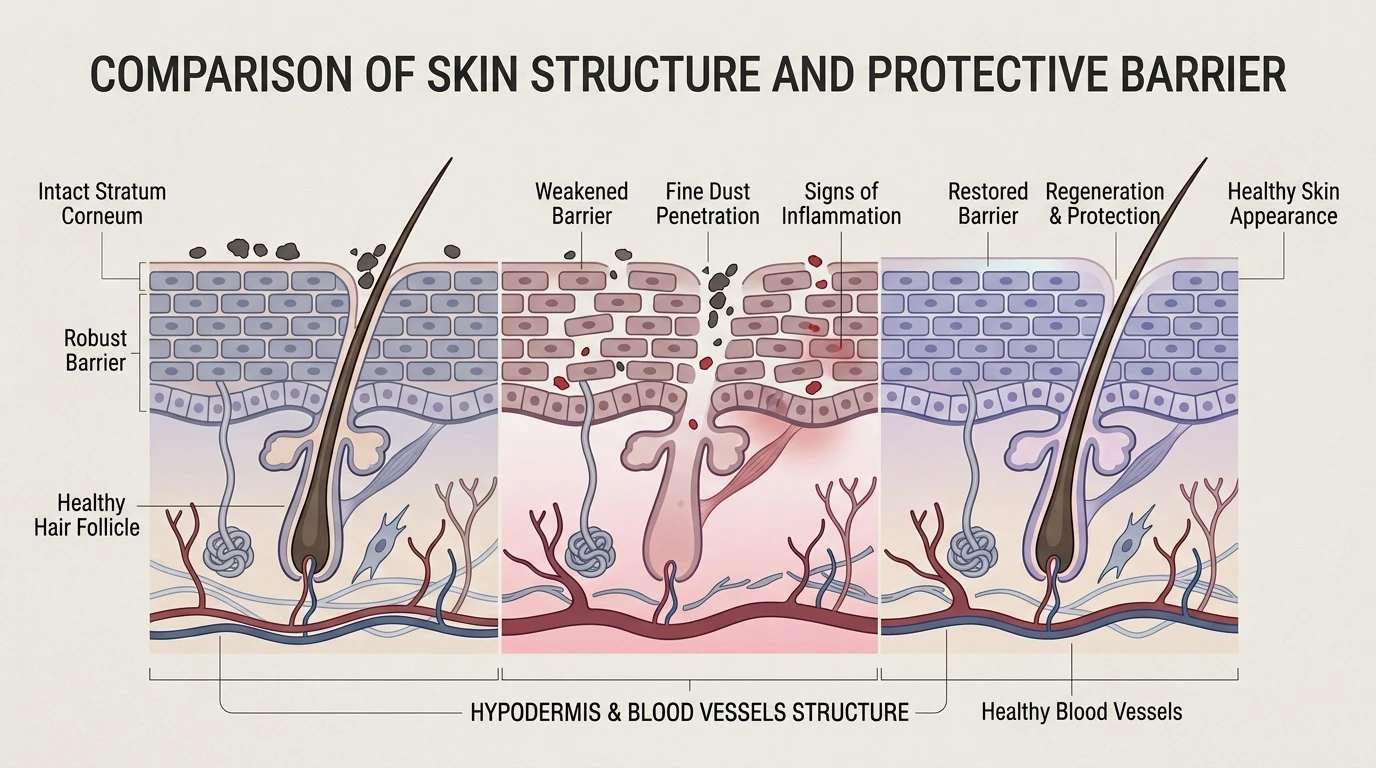
The outermost layer of the skin, the stratum corneum, is a genuine barrier. In an experiment on mice, fine dust collected from Seoul's air and applied to healthy skin stayed in the openings of the hair follicles. Only after the outer layer had been stripped away with tape did the particles work their way between the cells and cause inflammation. Most of the evidence that particles pass through skin comes from mice and from skin that has already been damaged; for intact human skin, it has not been clearly shown.
What we know about the mechanisms (particles and PAHs increasing oxidative stress, switching on enzymes that break down collagen, stimulating pigment cells) comes mostly from skin cells grown in dishes. A 2020 systematic review noted that these models reflect real life only to a limited extent.
Ozone shows the gap between the laboratory and daily life clearly. When human skin was exposed to 0.8 ppm of ozone for two hours in a test chamber, about 15 times the World Health Organization's 8-hour guideline level, vitamin E in the outer skin layer fell by 70% and lipid oxidation products rose 2.3-fold, yet the skin did not become dry or red. The authors themselves concluded that ultraviolet light is a much more significant threat than ground-level ozone.
What about pollution and sunlight "amplifying" each other? In cultured cells, PAHs combined with UVA light are toxic at very low doses. Human data have not confirmed this: in German women, traffic particles and UV exposure did not simply add up in their effect on age spots.
The practical takeaway is that the skin barrier decides most of whether particles can "get in". People whose barrier is already weakened, by eczema, by overusing active ingredients, or by a recent procedure, are the ones who should pay most attention. Signs of a damaged barrier and a week-by-week repair plan are covered in our skin barrier guide. Skin that has just had a peel, microneedling or laser needs care matched to the type of injury; see aftercare after peels, microneedling and laser.
Riding a motorbike in Ho Chi Minh City: the dust is real, but the sun matters more

According to IQAir's air quality data, Ho Chi Minh City's annual average PM2.5 was around 21 µg/m³ between 2022 and 2025: about four times the World Health Organization's guideline of 5 µg/m³, though below Vietnam's national limit of 25 µg/m³. Data from the US Consulate monitor for 2018–2023 show that particle levels run higher in the dry season and peak during the commute itself, from 7 to 9 am and from 4 to 6 pm.
On a motorbike you sit in the middle of the traffic fumes with nothing around you. A study that measured real trips in Ho Chi Minh City found that motorcyclists were exposed to the highest particle concentrations, followed by bus and then car commuters; wearing a mask while riding cut inhaled PM2.5 by about 33–43%, and surgical masks filtered better than cloth ones. Another experiment, with masks fitted on mannequins beside two busy roads in the city, found that no mask stopped all particles, mainly because of poor fit.
That is about your lungs. For your skin, two other things deserve more attention than the dust: sunlight and friction.
On some days the UV index in Ho Chi Minh City reaches 7.5–10 between 11 am and 2 pm, according to Vietnam's National Center for Hydro-Meteorological Forecasting, which is "high" to "very high" on the World Health Organization's scale. The evidence on what sunlight does to skin is also far stronger than the evidence on pollution. In a randomised trial in Australia involving 903 people under 55, those assigned to apply sunscreen every day showed no detectable increase in skin aging after four and a half years, judged by the skin surface on the back of the hand, and aged 24% less than those who used sunscreen only when they felt like it. Nothing about fine particles is established with that kind of confidence.
Friction gets less attention. Masks, helmet straps and trapped sweat over a long ride make facial skin more prone to breakouts and irritation. A meta-analysis of 37 studies covering nearly 30,000 mask wearers found that 55% had facial skin problems, acne accounted for 31%, and the length of time a mask was worn was the clearest risk factor. In a survey in Thailand, wearing a mask for more than four hours a day went with almost double the risk of a skin reaction, and reusing a mask rather than changing it daily with about 1.5 times the risk.
What's worth doing, ranked by strength of evidence
1. Use sunscreen every day, even when it's overcast. Of everything on this list, it has the strongest evidence. How to choose a sunscreen, how much to use and when to reapply are covered in our guide to using sunscreen properly. If you tan easily or already have melasma, a tinted sunscreen containing iron oxides also blocks some visible light; the reasons are explained in why melasma comes back. Masks, hats and sun-protective jackets add to sunscreen; they don't replace it.
2. Wash your face once in the evening, gently. In a randomised trial of 88 firefighters, washing with water and a detergent was the only method that significantly reduced the PAHs left on the skin (from 0.72 to 0.38 ng/cm²); the two types of wipes tested did not. A fire is very different from a city street, and the trial measured only what remained on the skin, not whether the skin was any healthier. Still, it supports a simple habit: in the evening, one wash with a gentle cleanser to remove the day's dust, oil, sweat and sunscreen. There is no evidence that washing more often helps, while over-washing weakens the barrier that is protecting your skin in the first place. When a two-step cleanse is worth it, and how to tell your cleanser is too strong, are covered in our article on skincare routine order.
3. Keep your skin barrier healthy. In a split-face trial of 64 people in South Korea whose skin reacted to fine dust, four weeks of barrier cream, micellar water or an antioxidant product during the high-pollution season produced no differences between them; the authors concluded that maintaining the barrier with a barrier cream seems to be enough. A moisturiser suited to your skin type (see how to determine your skin type) is a simple step that few people do consistently.
4. Avoid tobacco smoke. Of all the kinds of smoke people are exposed to every day, tobacco smoke has the clearest evidence for aging the skin. In identical twin pairs where only one twin smoked, the smoker had worse eye bags, deeper nasolabial folds, more upper-lip wrinkles and more sagging along the jaw; even a five-year difference in smoking history was enough to see a difference.
5. Think about the air at home. In a survey of 40,279 young adults in eight Chinese cities, burning mosquito coils or incense indoors went with more symptoms of eczema, facial redness and seborrhoeic dermatitis (odds ratios of about 1.3 to 1.6), while using air conditioning, daily cleaning and airing bedding in the sun went with fewer. It was a self-reported survey, so it shows associations only, but opening a window or door when burning incense is an easy step.
6. Antioxidant serums: optional, not essential. Human evidence is thin. One of the few trials with clinical outcomes involved 105 women aged 40 to 60 with high pollution exposure in Beijing. After 84 days, those who added a day-and-night antioxidant serum had slightly higher skin-brightness readings and less redness than those using a basic moisturiser alone. The trial included a co-author from the manufacturer, and the Korean trial mentioned above found no difference. Vitamin C has other reasons to be in a routine; see our skincare actives guide.
What an "anti-pollution" label actually tells you
Plenty of products are labelled "anti-pollution". The term is not tied to any shared test: each brand chooses how to back it up, usually with experiments on cells or lab-grown skin, or by measuring how many particles stay on a small patch of skin after washing. Those tests show what a product can do under laboratory conditions; they don't tell you whether you will have fewer brown spots or wrinkles a few years from now. A 2020 review of pollution and skin aging concluded that, for the skin, the benefits of wearing a mask, using an air purifier, taking antioxidant supplements or applying products that target "detoxification" pathways all remain unproven.
In practice: if a product labelled "anti-pollution" is also a gentle cleanser, a moisturiser that suits you or a good broad-spectrum sunscreen, use it for those basic jobs. The label itself is not a reason to pay more, and it does not replace sunscreen.
When to see a dermatologist
Pollution is rarely a reason to see a doctor in itself, but some signs shouldn't be handled on your own:
A new brown spot that appears quickly, or any spot that changes in size, colour or border, itches or bleeds. These need to be examined, not assumed to be "from the pollution".
Not knowing whether you have age spots, freckles or melasma. The three are treated differently; for melasma, see melasma: causes and treatment.
Redness, itching or flaking that keeps coming back despite gentle care, especially if you have a history of eczema.
Acne that lasts for weeks or starts leaving dark marks or scars. The treatment options are set out in what is acne.
Stinging or a rash exactly where your mask sits, or after switching sunscreen, which may be contact dermatitis.
Skin analysis and advice at Eternal
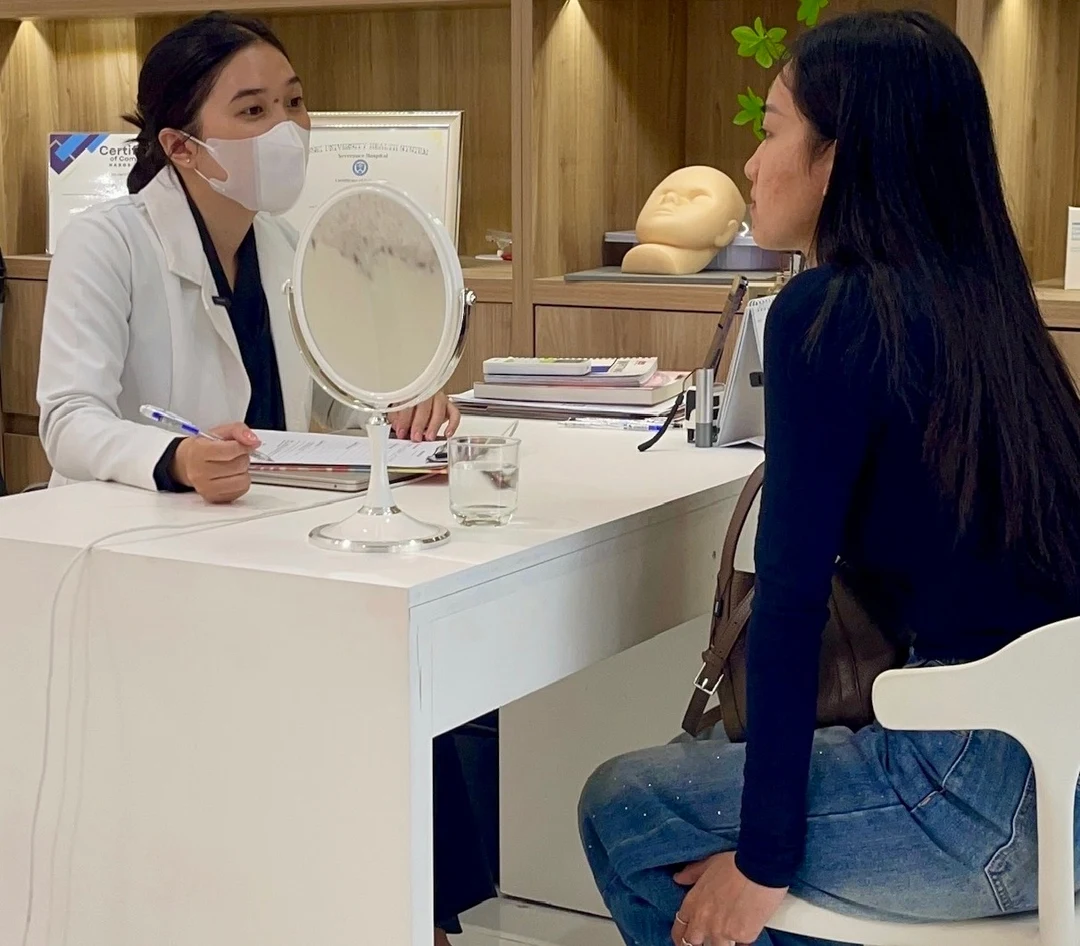
What commuters often call "skin dulled by pollution" is usually several different things layered together: a rough, dehydrated surface, pigment sitting at a shallow or deeper level, or a barrier that is losing water. Skin analysis helps tell these apart before you choose products. A skin analysis and consultation at Eternal aims for a routine you can keep up when you are out on the road every day: enough sun protection, the right amount of evening cleansing, a moisturiser that suits your skin, and active ingredients only when there is a reason for them.
If you want a periodic deep cleanse and hydration, the Aquapeel treatment is carried out at our centre. It is an occasional addition: it doesn't replace washing your face properly every evening, and it cannot "detox" what years of sun and smoke have accumulated.
Eternal Beauty Center — 204 Đường Số 1, An Hội Đông Ward (formerly Go Vap District), Ho Chi Minh City. Hotline / Zalo: 0334 713 610. View map.