A sensible skincare routine order follows what each layer is for: cleanse → treat → moisturise → protect, with sunscreen as the protective layer in the morning. At night the sunscreen step drops out, and if you wore water-resistant sunscreen or long-wear makeup that day, cleansing gets an extra step. A minimal routine needs only three steps, and every step you add should do a job the others are not already doing.
Skincare routine order, morning and night
Layer | Morning | Night |
|---|---|---|
1. Cleanse | Gentle cleanser — or just water, if your skin is dry or sensitive | Makeup remover / first cleanse (when needed) → gentle cleanser |
2. Treat (optional) | Antioxidant serum, gentle actives | Retinoid, exfoliating acid, prescription topicals |
3. Moisturise | Moisturiser with a texture that suits your skin | Moisturiser, often richer than in the morning |
4. Protect | Sunscreen — the last skincare step, before makeup | — |
The table only tells you where each layer sits. Which actives belong in the morning or evening, which pairs must be separated and which to avoid altogether is a separate question, answered in our skincare actives guide. This article covers the foundation underneath: why the layers go in this order, how much cleansing is enough, and which steps you can leave out.
Why this order: four functional layers
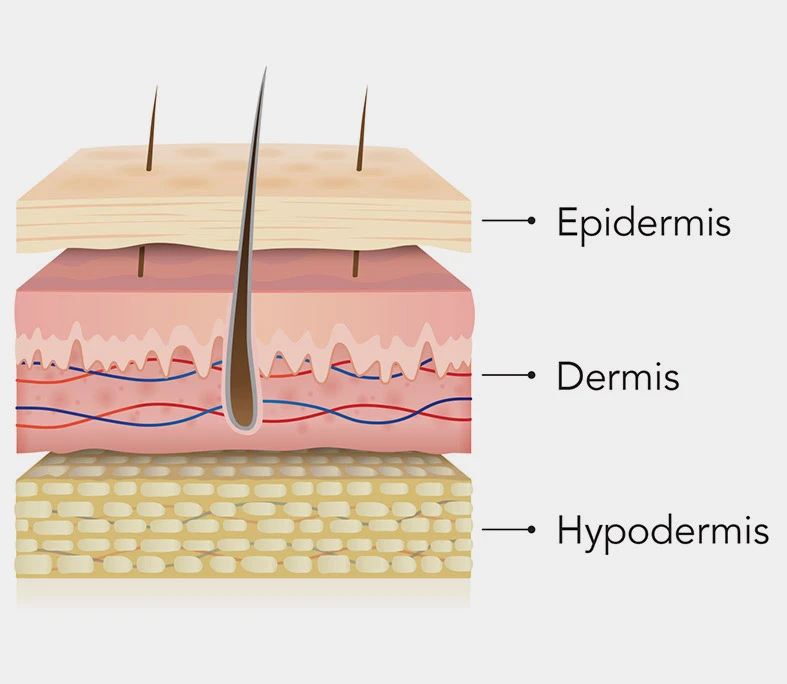
Rather than memorising "step one, step two, step three", ask one question of every product: does it need to reach the skin, or does it need to sit on top of it?
The cleansing layer clears away excess oil, sweat, dust, sunscreen and the previous day's makeup. Everything applied afterwards makes better contact with skin once the surface is clean.
The treatment layer is where actives do their work — retinoids, acids, vitamin C, acne medication. They need direct contact with the stratum corneum, so they go closest to the skin after cleansing.
The moisturising layer holds water in the skin and softens the surface. Moisturisers usually contain film-forming ingredients that slow water loss, and that same film also holds back whatever is applied on top of it — which is why moisturiser comes after treatment. The reverse is worth knowing too: an occlusive layer placed over an active often, though not always, increases how much of it penetrates (Zhai and Maibach, 2001), so an irritating topical may sting more when sealed under a heavy cream. The three ingredient groups in moisturisers, and how to choose between them, are covered in our skin barrier guide.
The protective layer — sunscreen — is the only one whose performance depends on sitting evenly on the surface. A sunscreen reaches its labelled SPF only as a continuous film of adequate thickness. Rubbing another cream in over it can thin that film and leave it patchy, so it goes last.
Where "thin to thick" holds, and where it breaks
The familiar rule of "thinnest texture first, thickest last" works most of the time, because thin products tend to be water-based serums carrying actives, and thick ones tend to be sealing moisturisers. It is a convention derived from formulation logic, though, not something tested in trials comparing application orders. It breaks in at least three places:
Sunscreen is often very fluid, yet still belongs last, for the reason above.
Facial oils are thinner than cream but behave as an emollient and sealing layer. An oil applied before a water-based serum makes it harder for the serum to reach the skin.
Prescription topicals follow your doctor's instructions, not their texture. Some are prescribed before moisturiser; others are deliberately applied after it to reduce irritation.
When you are unsure about a particular product, go by what it does rather than how thick it is.
Cleansing: the step that decides every step after it

Getting cleansing wrong is a common reason why a routine that looks reasonable still leaves skin tight and stinging. The reason is simple: it is the only step that removes something, and it removes stratum corneum lipids along with the dirt.
How often should you wash your face
The American Academy of Dermatology's standard advice is to wash twice a day and after heavy sweating, using fingertips and lukewarm water, without scrubbing with a washcloth or pad.
The direct evidence for "twice" is thinner than the advice suggests. The randomised controlled trial most often cited (Choi et al., Pediatric Dermatology, 2006) enrolled only men with mild to moderate acne and ran for six weeks. It found no statistically significant difference between groups washing once, twice or four times a day. Within groups, twice-daily washers improved in open comedones and total non-inflammatory lesions, while once-daily washers saw inflammatory lesions increase. The authors themselves described the support for twice-daily washing as "slight". The study cannot be applied directly to skin without acne or to women, but it is a reasonable basis for not washing less than twice a day when you have acne — and for not washing more.
In a hot, humid climate, where many people commute by motorbike and wear a face mask for hours, the evening wash is almost always needed: by then the skin is carrying a full day of sweat, sebum, sunscreen and dust.
Do you need a cleanser in the morning

Not everyone does. If you cleansed thoroughly the night before and your skin is dry or sensitive, rinsing with water in the morning is a reasonable option. Oily or acne-prone skin, or anyone who applied medication or a rich cream overnight, usually feels better with a small amount of gentle cleanser.
A simple test: skin should not feel tight after washing. That "squeaky clean" feeling is a sign the cleanser is removing more than it needs to.
Makeup removal and double cleansing: when it is really needed
Double cleansing — an oil or makeup remover first to dissolve oily films, then a regular cleanser — is often presented as essential. The available data suggest it depends on what you put on your skin that day.
A study by Chen et al. (Journal of Cosmetic Dermatology, 2020) used facial imaging to measure how much sunscreen remained on the faces of 20 people after washing with water, a foaming cleanser, or a cleansing oil:
Residue left | Water | Cleanser | Cleansing oil |
|---|---|---|---|
Non-water-resistant sunscreen | ~54% | ~16% | ~13% |
Water-resistant sunscreen | ~59% | ~37% | ~6% |
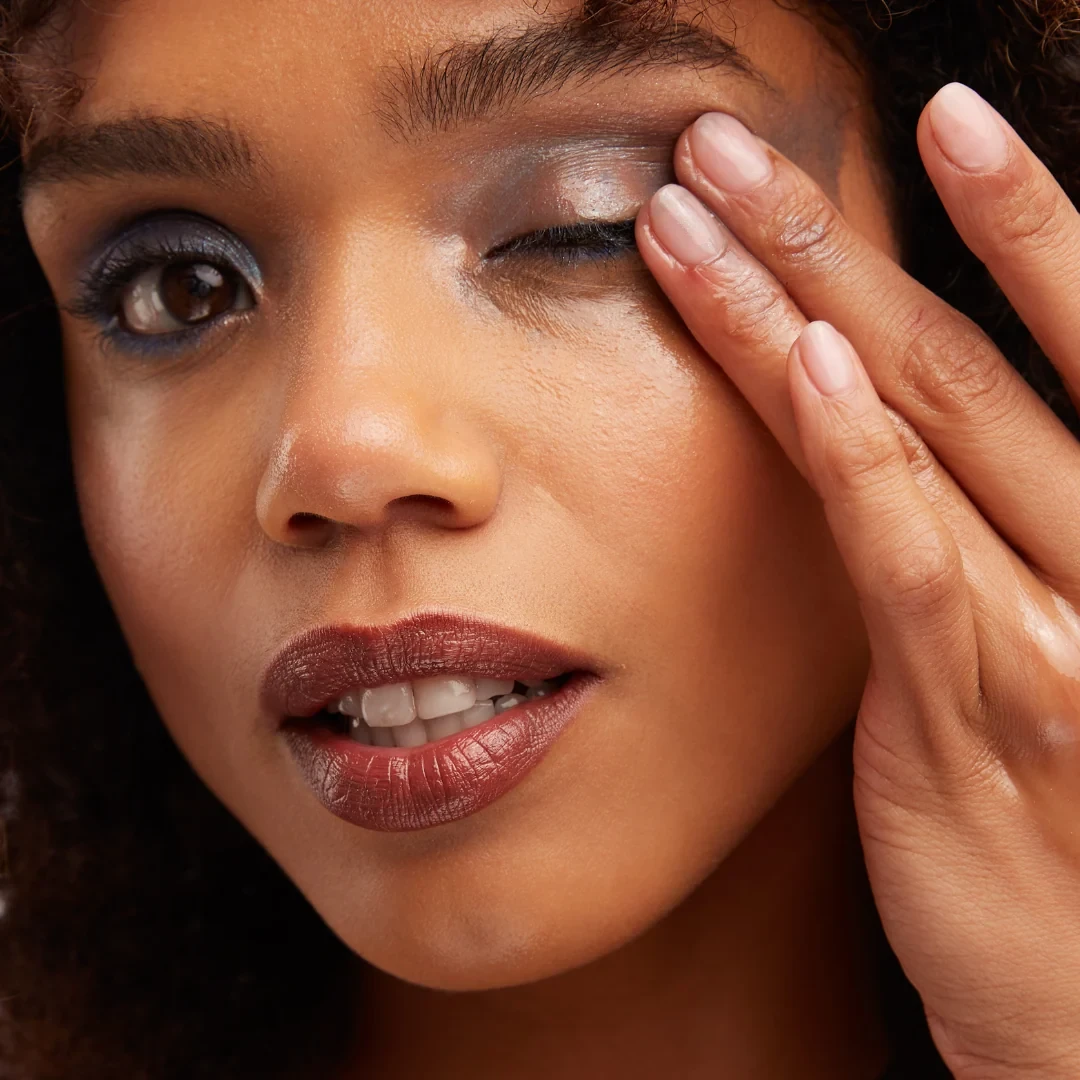
For the regular sunscreen, cleanser and cleansing oil performed about the same. For the water-resistant one, only the cleansing oil brought residue back close to baseline. Eight people in the cleanser group reported dry skin afterwards, compared with one in the oil group. This is a small study of a few specific products, and the authors themselves call for further work with other sunscreens and cleansers, so the figures are best read as a direction rather than a rule.
In practice:
Double cleanse on days you wore water-resistant sunscreen (usually labelled "water resistant"), long-wear foundation or lipstick, or waterproof mascara.
One cleanse is usually enough with ordinary sunscreen and no makeup — a gentle cleanser, rinsed thoroughly.
If you use a cleansing oil, choose one that emulsifies with water (turns milky when wet) so it rinses off completely, then follow with your cleanser.
Double cleansing does not mean washing twice as long or scrubbing harder. If your skin stings after washing, look at how strong your cleanser is before adding any repair product.
Toner, essence, serum: which steps are optional
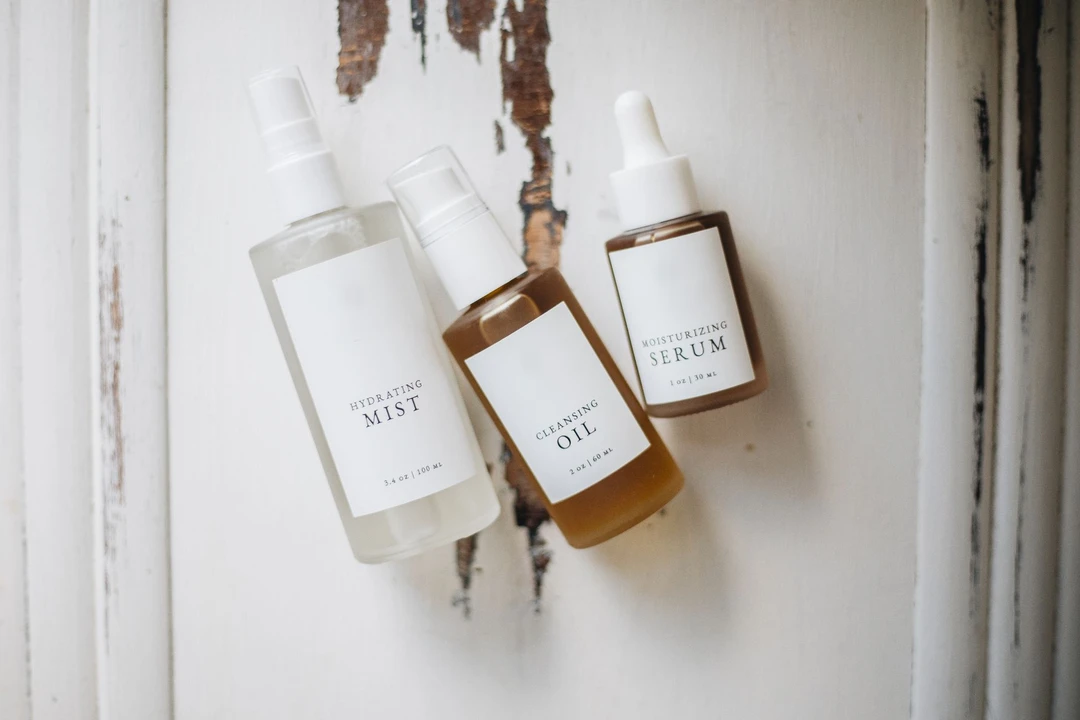
Many steps in long routines come from the history of the products rather than from what skin needs.
Toner dates from the era of alkaline bar soap. Traditional soap has a pH of roughly 8.5–11, while the skin surface is mildly acidic; toner was used to wipe away soap residue and bring the surface back towards acidity. Most modern cleansers use synthetic surfactants with a pH much closer to skin's (as summarised in a review by Mijaljica et al., Molecules, 2022), so toner's original purpose has largely gone. Today's hydrating toners are essentially a humectant layer — fine if you enjoy them, not required. Acid toners are a different matter: they are treatment products and count towards the total amount of exfoliation you are doing.
Essence and serum describe a product format, not a function. A serum can be a treatment layer (a retinoid, vitamin C) or simply a humectant. Instead of asking "do I need a serum?", ask "what is in this serum, and is that already in another product I use?"
If a step only repeats what your moisturiser already does, dropping it rarely makes skin worse.
Sunscreen always sits on the outside of your skincare
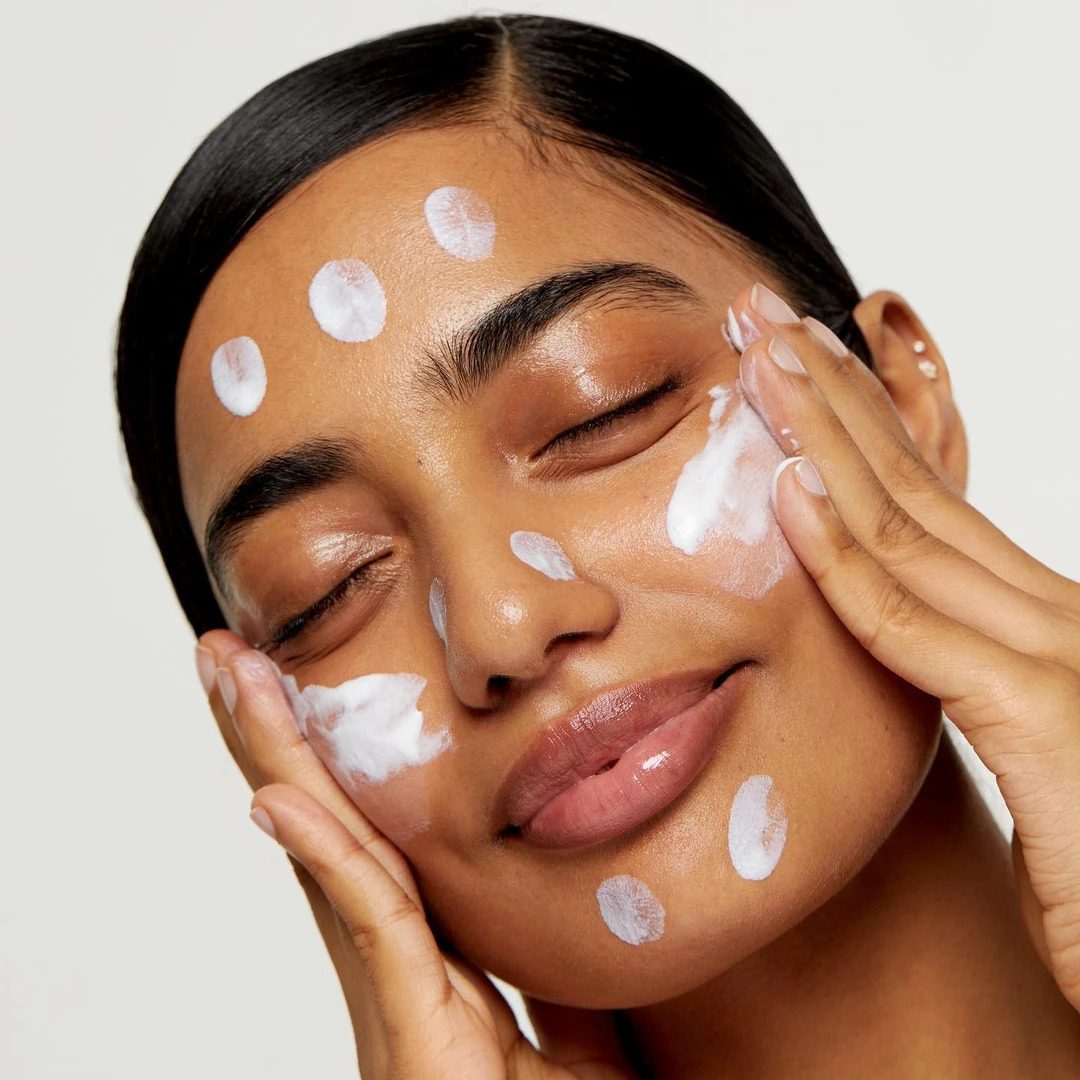
Sunscreen is the last skincare step in the morning, after moisturiser and before makeup. If your sunscreen is moisturising enough for oily skin, you can skip morning moisturiser — but not the other way round, dropping sunscreen because your moisturiser "already has SPF".
How much to apply, when to apply it and how to reapply during the day are covered separately in our guide to using sunscreen properly.
Can an SPF moisturiser replace sunscreen
In theory, a properly tested SPF 30 moisturiser and an SPF 30 sunscreen give the same protection if applied in the same amount with the same coverage. In real use, they do not.
A University of Liverpool study (Lourenco et al., PLoS One, 2019) used UV photography on 84 people after they applied SPF 30 sunscreen on one visit and SPF 30 moisturiser on another. With moisturiser, an average of 16.6% of the face was missed, compared with 11.1% with sunscreen. Most of the gap was around the eyelids: 20.9% missed with moisturiser versus 14.0% with sunscreen. Participants were unaware they had missed areas. The authors advise using sunscreen for prolonged sun exposure; an SPF moisturiser is better than one without SPF, but should not be treated as equivalent.
Foundation and powder with SPF have the same problem to a greater degree: SPF is measured at an application far thicker than the amount of foundation people normally wear. They add protection; they do not replace the sunscreen step.
Makeup over sunscreen
Few independent studies have directly measured how much protection is lost when makeup goes on over sunscreen. But because sunscreen works as a continuous, even film, the cautious approach is to let sunscreen set for a few minutes, then press or pat foundation on rather than buffing back and forth.
Do you need to wait between layers
For most cosmetic products there is no evidence supporting a fixed wait such as "exactly five minutes after serum". Waiting until the previous layer no longer feels slippery on the surface — usually about a minute — is enough to stop the next one sliding around.
There are two situations where waiting genuinely matters:
A prescription retinoid on freshly washed skin. The label instructions for some tretinoin products in the United States are explicit: wait 20–30 minutes after washing so the skin is completely dry, to minimise irritation. Damp skin lets the drug penetrate faster and more strongly, which is not what you want from an irritating medication. If you use a prescription retinoid, follow the instructions of the doctor who prescribed it. Other irritation-reducing techniques, such as sandwiching the retinoid between layers of moisturiser or short-contact application, are covered in our skin barrier guide.
Sunscreen before makeup, for the reason given above.
Sometimes slightly damp skin is an advantage: a humectant-rich moisturiser applied to skin that has been patted but not fully dried holds on to a little extra surface water. Whether to wait depends on whether you want to increase or reduce penetration.
When products pill
Pilling — product rolling into small flakes as you rub it in — is a problem between layers, not a sign that skin "can't absorb" something. The usual causes are applying too much, applying the next layer while the previous one is still wet, or two products whose film-forming systems do not get along, which often happens when sunscreen or foundation goes over a silicone-heavy moisturiser.
Work through it in order: use less of each layer; let each one set; pat instead of rubbing in circles; and if it still pills, swap one product at a time to find the incompatible pair. When sunscreen pills, protection is broken wherever it has flaked, so this is worth fixing, not just a cosmetic annoyance.
Where actives and prescription topicals go
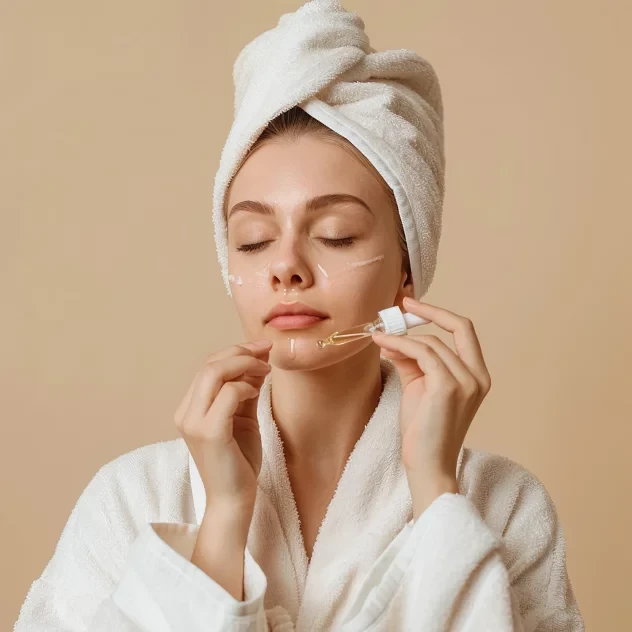
Treatment actives sit in the second layer: after cleansing, before moisturiser, on dry skin. If you use more than one, the order between them matters less than whether they should share the same routine at all. That question has its own answer in the actives combination table and, for the pairing people ask about most, in can you use BHA and retinol together.
Two notes on placement:
Prescription medication always gets priority for direct skin contact. If a cosmetic makes your medication harder to apply or makes it sting, ask the prescribing doctor — do not stop the medication to keep the cosmetic.
Spot treatments go only where needed, after cleansing. If it is a leave-on cream or gel, apply it before moisturiser so the moisturiser does not spread the active onto surrounding skin.
Adding new products also needs pacing: one at a time, watching for a few weeks before the next — as described in our article on avoiding breakouts with new skincare.
How many steps are enough
The minimal routine most dermatology guidance agrees on is:
Morning: cleanse (water alone can be enough) → moisturise → sunscreen.
Night: cleanse (with a first cleanse when needed) → moisturise.
Every other step is either a treatment step or a preference, and should be added for a specific goal: active acne, dark marks, sun-related ageing. Skin type shapes the texture of the product at each step rather than the number of steps; how to work out your skin type and what it really changes is covered in how to determine your skin type.
There is also a safety reason to keep a routine lean. Fragrances and preservatives are among the most common causes of allergic contact dermatitis from cosmetics (DermNet). A quantitative risk assessment of fragrance in personal care products (Drechsel et al., Dermatitis, 2018) found sensitisation risk concentrated in leave-on products such as face cream, not in rinse-off products such as facial cleanser. Each leave-on layer adds another set of ingredients in daily contact with your skin. More steps are not automatically more dangerous, but when irritation starts, a six-step routine is much harder to troubleshoot than a three-step one.
A practical test for any step: if you dropped it for two weeks, would you honestly notice a difference? If not, it is a step you can drop.
And one point that is easy to overlook: consistency matters more than perfect sequencing. A three-step routine done every day will outperform an eight-step routine managed a few days a week.
When to have a doctor review your routine
A basic routine does not replace an examination when:
Skin still stings, reddens or peels after several weeks on the three basic steps.
Acne has not improved after roughly two to three months of a consistent, sensible routine.
You are using prescription topical or oral medication and are unsure how to fit cosmetics around it.
The main concern is melasma, post-acne marks or scarring — conditions a home routine can support but not fully resolve.
You have persistent redness across the centre of the face, or bumps with no comedones — possibly a different skin condition; see facial skin conditions mistaken for acne.
Book a skin analysis and routine consultation at Eternal Beauty Center

A routine that fits starts with knowing what your skin needs. At Eternal Beauty Center, a skin analysis and consultation assesses oil levels, hydration, barrier condition and pigmentation, then goes through the products you already use with you: which steps are doing their job, which overlap, and which might be causing irritation. The outcome is usually a shorter routine, not a longer one. For what skin analysis can and cannot measure, see what skin analysis shows.
For periodic deep cleansing and hydration, the Aquapeel treatment is carried out at our centre. It is an occasional add-on, not a substitute for cleansing and moisturising at home every day.
Book: 0334 713 610 (phone/Zalo) — 204 Đường Số 1, An Hội Đông Ward, Ho Chi Minh City (formerly Gò Vấp District). View map.