Aftercare should follow the kind of injury a procedure creates, not one generic list. A superficial peel sheds the surface layer but leaves the skin intact; microneedling and RF microneedling make tiny channels that close quickly; a fractional CO₂ laser creates columns of micro-wounds whose surface takes about a week to heal; and diode laser hair removal leaves the outer skin intact while concentrating heat in the hair follicle. Sun protection is common to all four. When you can wash, wear makeup, sweat or restart retinol is different for each.
Four kinds of injury, four ways to care
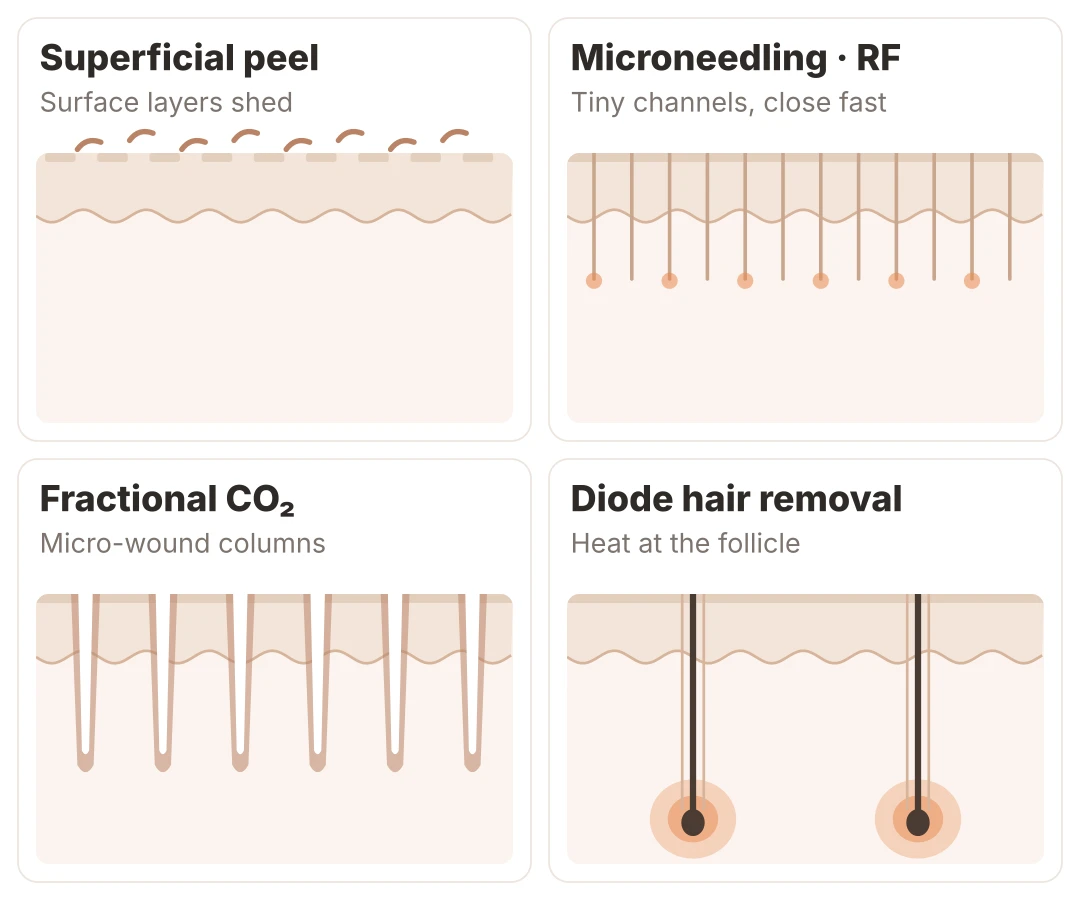
Every skin-renewal procedure injures the skin in a controlled way so that it rebuilds better. What differs is where the injury sits and how deep it goes, and that decides three things: how long the skin barrier stays "open", how long the window for post-inflammatory marks lasts, and what is allowed to touch the skin in the meantime.
Measurements of transepidermal water loss (TEWL), an index of how open the barrier is, show clear differences between procedures, although the studies are small. After a glycolic peel, TEWL rose immediately and returned to baseline within about 24 hours. After microneedling, most channels closed within hours, but with 1.5 mm needles facial TEWL was still above baseline at 48 hours, and channels closed more slowly in darker skin. After fractional CO₂ laser, TEWL took about one to two weeks to return close to pre-treatment levels. After hair removal, it barely changed.
While the barrier is open, anything applied to the skin travels deeper than usual, including things that should not. That mechanism, and why you should not add "recovery serums" of your own in the early phase, is analysed in post-laser recovery technology.
Side-by-side: when you can do what
Superficial peel | Microneedling, RF microneedling | Fractional CO₂ laser | Diode hair removal | |
|---|---|---|---|---|
Barrier open for | About 1 day | A few hours to over 48 hours, depending on needle depth | About 1–2 weeks | Barely opened |
Washing | Same day, cool water, gentle cleanser | After about 24 hours, gently | Gently as instructed; no rubbing, no picking scabs | As normal, cool water |
Makeup | Usually right away or the next day | After 24–72 hours (Eternal advises 48–72 hours) | Once the surface has healed, about 7–10 days, if the doctor agrees | Once redness settles, usually 1–3 days |
Sweat, exercise, sauna, swimming | Avoid for the first 48 hours | Avoid for the first 48 hours | Avoid until the surface has healed | Avoid for the first 48 hours |
Sun | Cover up and use sunscreen from day one | Cover up; sunscreen once allowed | Cover up carefully; limit daytime outdoor time for weeks | Shield the treated area |
Restarting retinoids, AHAs, BHAs | About 5–7 days | Once fully healed, usually about 1 week | 2–3 weeks or more, one at a time as the doctor advises | Once the area is no longer red or sore |
Risk of post-inflammatory marks | Low at the right strength | Clearly lower than CO₂ laser | Substantial, varies widely with settings; usually visible around week 4 | Present, especially on tanned skin |
The first and last rows rest on research data. The timings for washing, makeup, exercise and swimming mostly come from AAD and DermNet guidance and practice consensus; there are no comparative trials.
The table is a reference frame for typical treatments. The actual settings of a session (peel strength, needle depth, laser density and energy) can lengthen or shorten these timings, so the specific instructions you receive after each session always come first.
Superficial peels: the surface sheds, the skin stays intact
A superficial peel acts only on the stratum corneum and the upper epidermis. There is no open wound, but the barrier is disturbed for a few days: the skin stings easily, dries out and is more sensitive to sun than usual. The main job is to let the surface shed on its own (no peeling it off, no scrubbing), moisturise gently and protect from the sun. Many newer peels cause almost no visible peeling; that does not mean the skin has finished recovering.
Step-by-step care after a peel is covered in what a chemical peel is, and sensible spacing between sessions, plus how to tell you are peeling too often, in how often you can have a chemical peel.
Microneedling and RF microneedling: the first 24–48 hours matter most
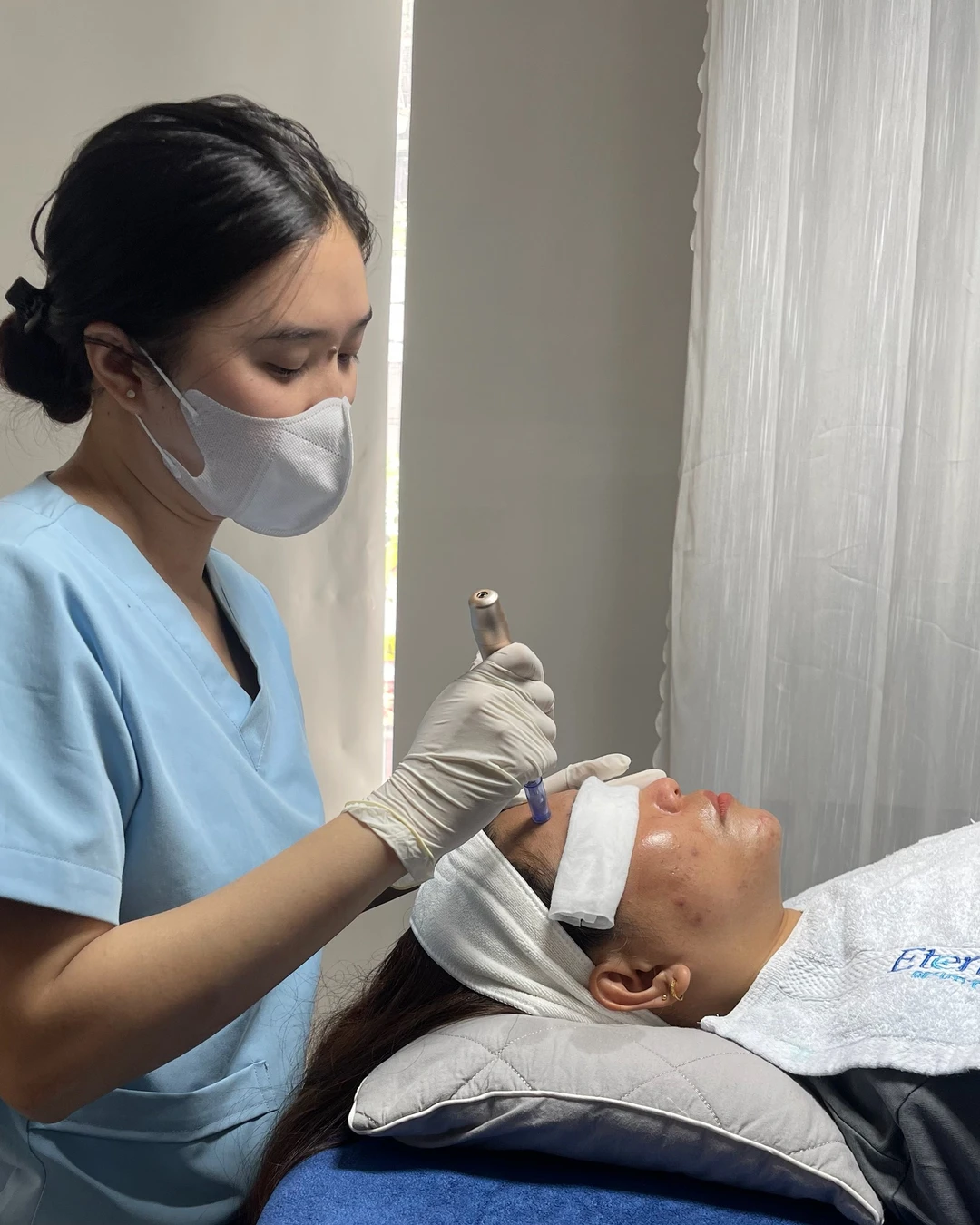
The channels made by needles are small and close quickly. While they are open, though, whatever sits on the skin can follow them deeper. Three cases of facial foreign-body granulomas have been reported after topical products, including a vitamin C serum, were applied before or during microneedling at spas: the lesions appeared 3 days to 2 weeks later, two of the three patients reacted to that same serum on patch testing, and one case lasted for months. It is a very small case series, but it yields a clear rule: while the channels are open, only sterile products that have been prescribed should touch that skin. Expert consensus on what may be applied straight after microneedling is not settled, and one such consensus was funded by a serum manufacturer.
The good news is that the risk of marks after microneedling is clearly lower than after laser: pooling 17 studies, the risk of post-inflammatory marks after fractional CO₂ laser was about three times that after microneedling.
Day to day, this phase is simple: no makeup for the first 48–72 hours, keep your hands off your face for 24 hours, use a clean towel and pillowcase, and apply nothing beyond what you were given after the session. RF microneedling adds heat, so redness tends to last a little longer than with microneedling alone, but the care principles are the same.
Fractional CO₂ laser: care for it like a shallow wound
A fractional CO₂ laser vaporises tiny columns of tissue down into the dermis, with healthy skin between them. The surface needs about 7–10 days to heal, while background redness can last for weeks; the day-by-day course is described in fractional CO₂ laser.
Two things are worth knowing about the first days. First, unless you have been prescribed something else, a gentle occlusive such as petrolatum is usually preferred over an antibiotic ointment you buy yourself. In a randomised trial of 1,249 surgical skin wounds, overall infection rates did not differ significantly between petrolatum and topical antibiotic (2.0% vs 0.9%), although Staphylococcus aureus infections were more common with petrolatum, while allergic contact dermatitis occurred only with the antibiotic. That trial involved surgical wounds, not laser wounds, so the right move is to use exactly what you were told: do not add an antibiotic on your own, and do not drop one you were prescribed.
Second, if you have ever had cold sores around the mouth, say so before the session. After resurfacing lasers, cold sores can flare (a series of 500 fully ablative CO₂ treatments recorded 7.4%), and doctors commonly prescribe antiviral prophylaxis; in one study using valacyclovir for 10–14 days, none of 120 patients had a recurrence.
For Vietnamese skin, the risk that matters most is post-laser marks. In Asian skin, reported rates range very widely, from 0% to 92% depending on settings, and marks usually become visible about a month after treatment before fading over several weeks. How to tell normal redness from a mark that is forming, and what to do if one appears, is covered in does CO₂ laser cause dark marks.
Diode hair removal: the outer skin stays intact, so avoid heat and sun
Hair-removal lasers target the pigment of follicles deep in the skin; the outer skin is cooled and left largely intact. So there is no need to care for it like a wound. The two jobs are to keep heat and sweat down for about the first 48 hours, when folliculitis is most likely, and to shield the treated area from the sun, because melanin-rich skin marks easily after inflammation. The reasoning behind each instruction, along with a table of normal reactions and reactions that need a call, is in care before and after laser hair removal.
In Ho Chi Minh City: when you cannot avoid heat and sun entirely
"Avoid sun and heat" is easy to say and hard to do in a city with sun all year round, where most people get around by motorbike. A few practical approaches:
Pick your appointment time. A late-afternoon session, or one before a day or two with little time outdoors, makes the first 48 hours much easier.
Cover up first, sunscreen second. Until your doctor allows sunscreen (as in the first days after CO₂ laser), a wide-brimmed hat and a soft, clean sun mask are your main protection. The mask should be loose enough not to rub the treated area.
Choose a tinted sunscreen once your skin allows it. In skin types IV–VI, visible light also causes darkening, and that darkening is deeper and longer-lasting than with UVA1; tinted sunscreens containing iron oxides block part of this range. No trial has tested them after procedures, but for Vietnamese skin they are a reasonable choice. How to choose one and apply enough is covered in how to use sunscreen properly.
Deal with sweat instead of letting it sit. Sweat under a helmet or mask is hard to avoid; blot it gently with a clean cloth and rinse with cool water when you get home, without rubbing.
Actively avoid heat in the first days: saunas, hot showers, intense workouts, long stretches at the stove. To be clear, no clinical study has shown that heat, saunas or hot showers worsen marks or redness after a procedure. The advice rests on mechanism (heat widens vessels, increases swelling and, in laboratory work, stimulates pigment cells) and on a few indirect clues, such as fewer complications after peels in winter. It is a cautious, cheap and easy precaution for the first few days.
Warning signs that need a call straight away
Contact the provider or a dermatologist if you notice any of the following, rather than waiting or applying more products:
Pain that keeps increasing instead of easing, warm swelling, cloudy discharge or yellow crusts, which suggest infection. After CO₂ laser, infection usually appears between day 2 and day 10.
Small blisters in clusters with burning pain, especially around the mouth, which suggests a cold-sore flare.
Itching, burning or redness spreading beyond the treated area after using a product, which suggests contact dermatitis.
Firm, raised red bumps or patches appearing days to weeks after microneedling.
Blistering, fluid-filled bumps or raw skin after hair removal.
Redness lasting more than a month, or a darker patch that appears and keeps deepening over the first weeks.
Fever, swollen glands or red streaks spreading outward.
Aftercare at Eternal
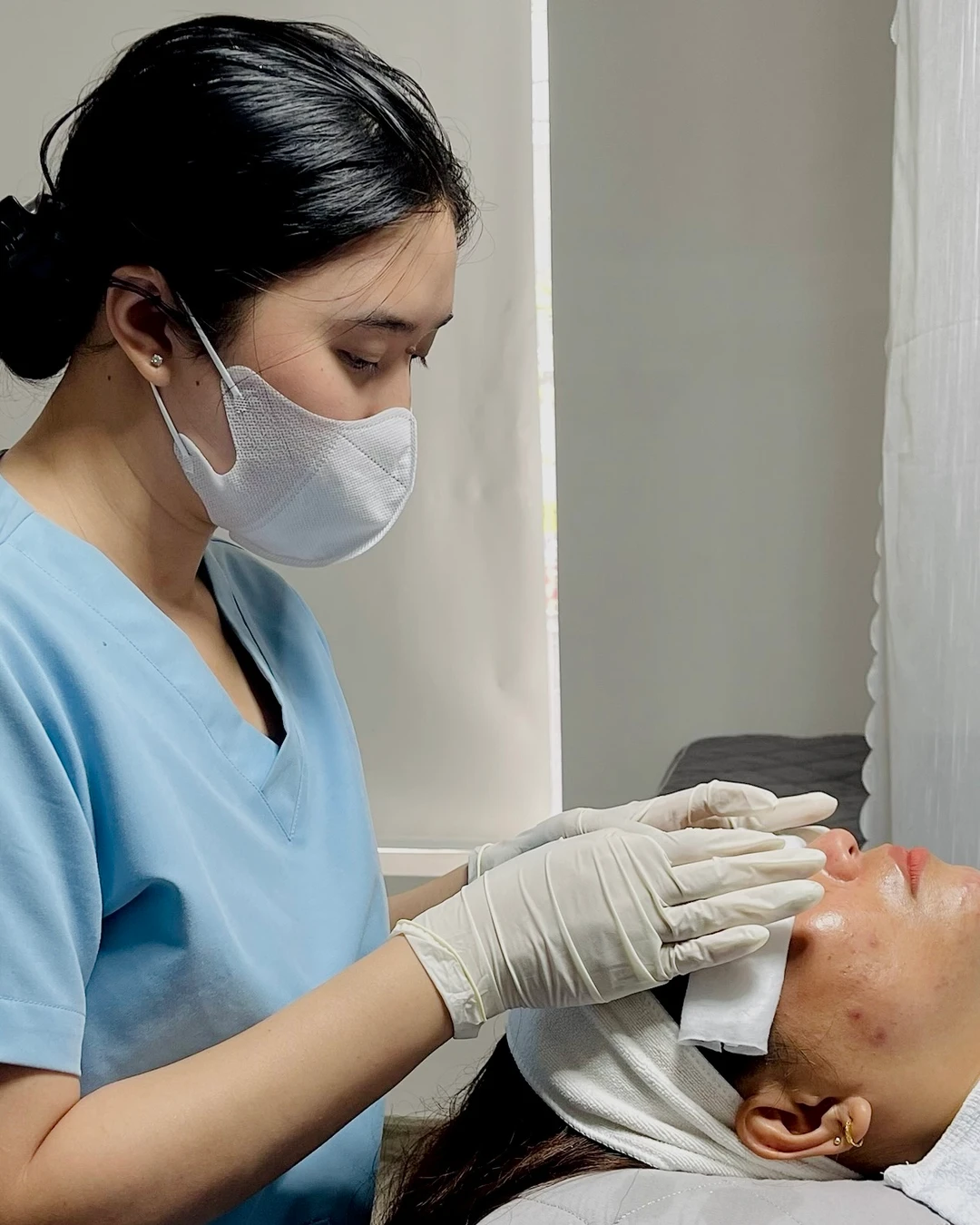
Every procedure at Eternal comes with aftercare instructions specific to the type and settings of that session, plus a follow-up schedule. For the acne-scar treatment E-Scar, which combines TCA CROSS, subcision, microneedling, RF microneedling and fractional CO₂ laser, sessions are usually 4–6 weeks apart depending on the method, and the instructions after each session change with the technique used. For hair removal and peels such as Mela Peel, the guidance focuses on heat, sweat and sun.
If anything differs from what you were told to expect (pain increasing rather than easing, spreading redness, blisters), get in touch rather than waiting or treating it yourself.
Eternal Beauty Center — 204 Đường Số 1, An Hội Đông Ward (formerly Go Vap District), Ho Chi Minh City. Hotline / Zalo: 0334 713 610. View map.