
Melasma comes back not because your treatment failed, but because clearing the pigment never removed the machinery that produced it. Once your skin looks even again, the overactive melanocytes, the extra blood vessels, the mast cells and the damaged basement membrane are all still sitting under the surface — and one trigger is enough to switch them back on. That is why the literature reports 27–70% of patients relapse after stopping treatment, depending on the method used. This article does not re-argue whether melasma can be cured. It answers the next question: what actually triggers a relapse, and how do you maintain results over 12 months so it stays away.
If melasma is new to you, start with the overview article Melasma: causes and evidence-based treatment. This piece is the deep dive on the maintenance phase, written by the dermatology team at Eternal Beauty Center (Go Vap, Ho Chi Minh City), drawing on StatPearls/NCBI, JAAD, AAD and DermNet.
How common is melasma relapse?
Relapse is the most likely outcome after melasma treatment, not the exception — and the rate varies sharply with the method you used. In a national survey of dermatologists, the most frequently reported recurrence band was 41–60% (chosen by 45.9% of respondents).
The specific figures from published studies:
| Method used | Relapse rate | Time frame |
|---|---|---|
| Triple combination cream (hydroquinone + tretinoin + corticosteroid) with twice-weekly maintenance | ~47% (53% stayed clear) | 6 months, n=242 |
| Oral tranexamic acid | 27.2% | after stopping, n=561 |
| Oral tranexamic acid stopped with no maintenance plan | 72% | within 2 months of stopping |
| Sequential chemical peels (glycolic + TCA) on Fitzpatrick IV–VI skin | 45% → 70% | 6 months → 3 months after stopping |
| Laser toning (low-fluence QS Nd:YAG) | 64–100% | 3 months |
Three things stand out. First, even the strongest protocol with disciplined maintenance keeps only about half of patients clear at 6 months — median time to relapse is roughly 190 days. Second, the more aggressive the method, the faster and harder the relapse: laser toning sits at the bottom of the table, which is exactly why laser for melasma: when it helps and when it doesn't urges caution there. Third, the gap between maintaining and not maintaining is enormous — 27.2% versus 72% with the same drug.
Put differently: the outcome of melasma treatment isn't decided at the last session of the course. It's decided over the following 12 months.
Why does it come back after the pigment has cleared?
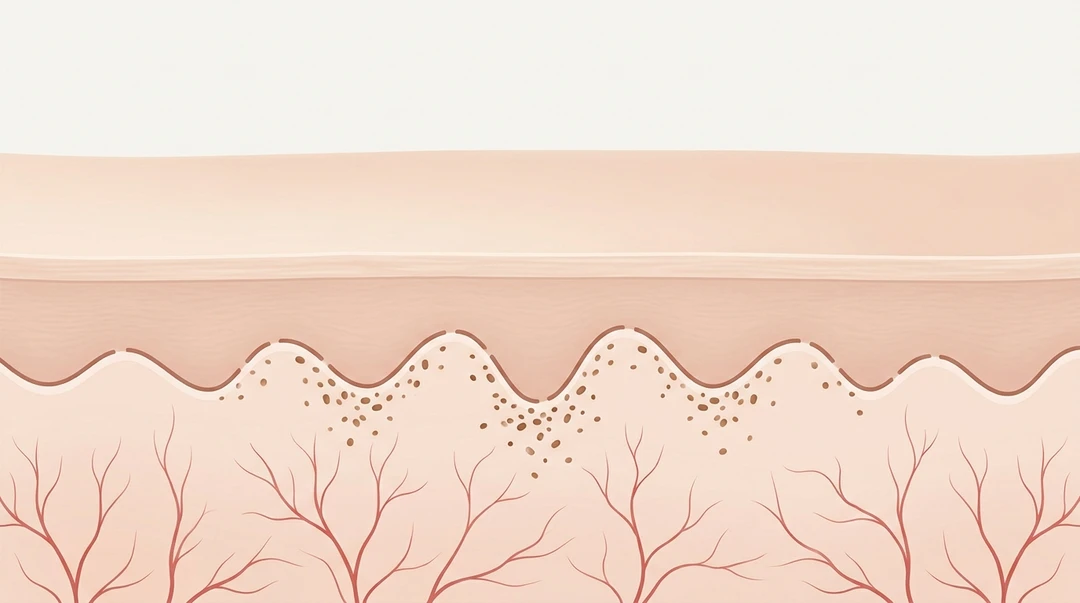
Because melasma isn't a stain on the surface — it's an area of structurally altered skin, and clearing the pigment doesn't repair those changes. Under the microscope, melasma-affected skin differs from the healthy skin right next to it even when it looks evenly toned to the naked eye:
The basement membrane is damaged in about 95.5% of melasma lesions. This is the floor separating epidermis from dermis. When it breaks, melanocytes and pigment granules drop into the dermis — where topicals barely reach and the body clears them extremely slowly.
Dermal blood vessels increase by roughly 68.75%, along with VEGF. Vascular endothelial cells release nitric oxide and endothelin-1 (up 32.8%) — both of which instruct melanocytes to make pigment. This is melasma's "red component", and it's easy to miss.
Mast cells increase, releasing inflammatory mediators and promoting new vessel growth — a self-feeding loop.
Senescent fibroblasts (p16INK4A-positive) persist in the dermis and keep signalling to melanocytes.
279 genes are expressed differently compared with adjacent healthy skin.
None of that disappears when the epidermal pigment is cleared. It is intact machinery that has simply stopped running. This is why the literature defines melasma as "a chronic, relapsing pigmentary disorder" (StatPearls) and describes clinical improvement as "frequently transient in the absence of sustained photoprotection and maintenance therapy".
Understanding this changes the goal you set: maintenance isn't an optional precaution, it's the part of the treatment that's still running.
The 7 triggers that restart melasma
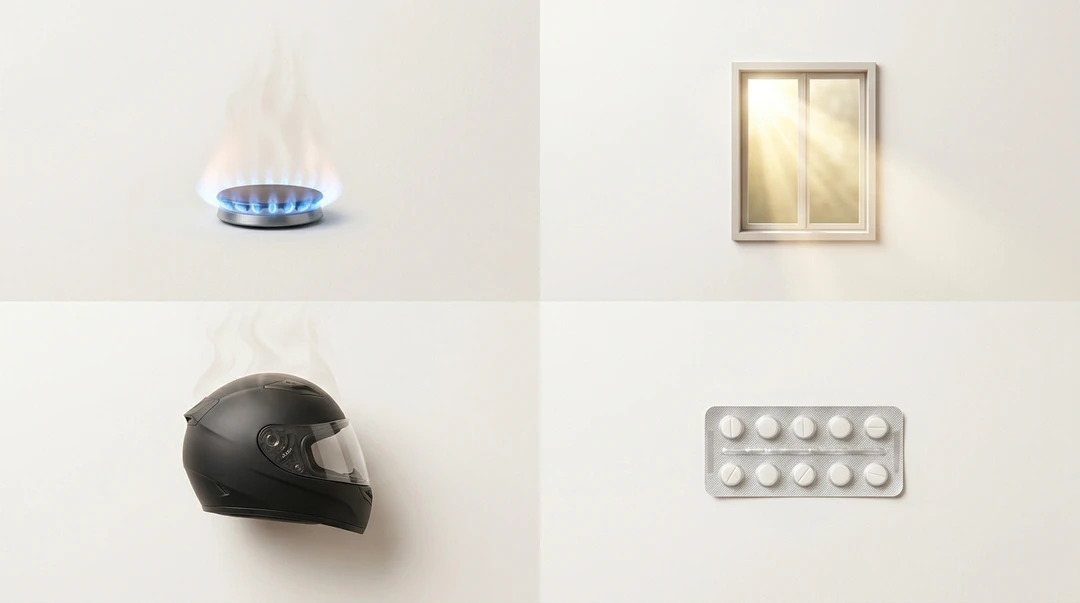
Most people guard against sunlight only — but sun is one trigger out of seven, and several of them operate even when you never step outdoors.
1. Visible light (HEV) — the most overlooked trigger
High-energy visible light (400–450 nm) activates the Opsin-3 receptor directly on melanocytes, switching on tyrosinase. In terms of the reactive oxygen species generated in skin: visible light contributes ~50%, UVA 46%, and UVB only 4%. Pigmentation induced by visible light on Fitzpatrick III–VI skin — which covers most Vietnamese patients — is darker and longer-lasting than pigmentation induced by UVB.
The problem: chemical filters and nano-sized zinc or titanium are transparent at these wavelengths, meaning an untinted SPF 50+ sunscreen offers you almost no protection against them. The practical fix is in the sunscreen section below.
2. Heat — independent of UV
This trigger is almost never discussed in Vietnam. Human skin held at 41°C developed significant pigmentation through the TRPV3/Ca²⁺/Hedgehog pathway — with no UV at all. In daily life that means:
Regular cooking, frying, standing over a stove
Saunas, facial steaming, steam rooms, hot yoga
Riding a motorbike in midday heat — your face takes both the sun and the radiant heat off the road
Heating appliances or high-output lamps positioned close to the face
Someone who cooks for a living or commutes daily by motorbike can be scrupulous about sunscreen and still watch their melasma darken — and heat is usually the missing explanation.
3. Window glass and car glass
Ordinary glass only blocks wavelengths below ~320 nm, meaning it stops UVB but lets UVA (320–400 nm) and all visible light through — precisely the two bands that drive melasma. Asymmetric photodamage on the driver's side of the face is documented in the literature. Sitting beside an office window all day, or driving long distances, is genuine exposure.
4. Hormones — beyond pregnancy
The article on postpartum melasma covers the pregnancy and breastfeeding branch in detail. But there are other hormonal events that get far less attention and often coincide exactly with a relapse:
Starting or switching hormonal contraception containing estrogen/progesterone
Ovarian stimulation and fertility treatment (IVF)
Perimenopause and hormone replacement therapy
Thyroid dysfunction — people with melasma have 4× the rate of thyroid disorders
If melasma returns with no change in sun exposure or skincare, check this group before blaming a product.
5. Stopping maintenance too early
This is the most common trigger and the most avoidable. With oral tranexamic acid, 72% relapse within 2 months of stopping without a handover plan, and average severity rebounds to 77.4% of baseline within 3 months. The mistake isn't the drug choice — it's treating melasma as a course with an end date rather than a condition to be managed.
6. Over-aggressive procedures and a damaged skin barrier
When the skin barrier is disrupted to the point that transepidermal water loss exceeds 40 g/m²/h, the same UV dose produces more melanin. Melasma-affected skin is already thinner than adjacent skin. So harsh scrubbing, over-exfoliation, stacked actives, peels that go too deep and waxing over affected areas all feed the relapse cycle. With lasers specifically, excess heat can cause outright rebound — see laser for melasma: when it helps and when it doesn't.
7. Photosensitising medications and products
Certain drugs (tetracycline antibiotics, some diuretics, anti-inflammatories, hormonal medications) and essential oils containing furocoumarins make skin more light-sensitive. If you've recently started a long-term medication and your melasma darkened a few weeks later, tell your dermatologist — there is usually either an alternative or a matching increase in photoprotection.
A 12-month maintenance plan
Maintenance isn't "keep applying what you were applying" — it's stepping intensity down in phases and rotating agents so side effects don't accumulate. The framework below synthesises StatPearls, Update on Melasma (Part II) and the maintenance trials. It's here so you understand the logic and can discuss it with your doctor — not to self-prescribe.
| Phase | Goal | Topical | Sunscreen | Review |
|---|---|---|---|---|
| Months 0–2 — induction | Clear the pigment | Active protocol as prescribed (triple combination cream or equivalent), max ~3 months continuous | Tinted, SPF 50+, daily | Every 4 weeks |
| Months 3–6 — transition | Hold the result, reduce intensity | Triple cream tapered to twice weekly (keeps ~53% clear at 6 months) | Unchanged | Every 6–8 weeks |
| Months 4–6 — hydroquinone holiday | Avoid cumulative toxicity | Stop hydroquinone; rotate to azelaic acid 20%, niacinamide 4–5%, cysteamine 5% or topical tranexamic acid 2–5% | Unchanged | Every 8 weeks |
| Months 7–12 — long-term maintenance | Stable coexistence | One gentle agent used consistently, plus short intensified cycles for flares | Unchanged, year-round | Every 3 months |
Key points when applying this:
Hydroquinone needs scheduled breaks. Typically 3 months on, 3 months off. Continuous use beyond ~6 months raises the risk of exogenous ochronosis — a blue-black discolouration that is treatment-resistant and considerably harder to fix than the original melasma. Triple combination cream (which contains a steroid) used daily beyond 6 months also causes skin atrophy and telangiectasia, and those visible vessels make melasma look darker.
Your original severity sets the maintenance schedule, not how clear your skin looks now. Anyone with severe or long-standing melasma should be on the denser schedule from day one.
Oral tranexamic acid is not a maintenance drug. The usual dose is 250 mg twice daily for 8–12 weeks, giving improvement in 89.7% of patients — but it must hand over to sunscreen plus a topical agent when stopped. It is contraindicated in anyone with a history of thromboembolism, kidney disease, on anticoagulants, or pregnant or planning pregnancy. It requires medical screening and prescription.
Concentrations and how to combine each agent are covered in actives for melasma — this article only covers when to rotate to what.
Sunscreen when you've had melasma: 3 things you do differently
How to choose and apply sunscreen is covered in sunscreen done properly. If you've had melasma, exactly three things change.
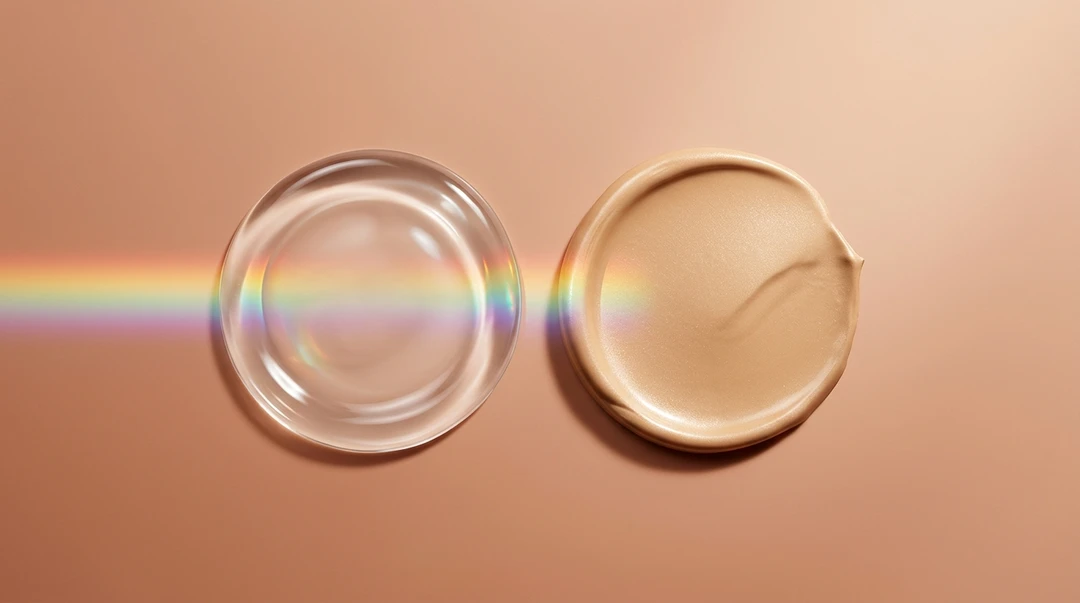
1. Your sunscreen must be TINTED (containing iron oxides). This is the strongest evidence in the entire melasma-prevention literature. In a randomised JAAD trial (n=40, 6 months), both groups used sunscreen with identical UV filters — the only difference was the iron oxides:
Tinted group (visible-light protection too): MASI rose only 0.45
Untinted group (UV protection only): MASI rose 2.43 (p=0.027)
That's roughly a 5-fold difference in relapse severity. A separate double-blind trial (n=68) found that when everyone applied 4% hydroquinone, the group protected against visible light improved 77.8% versus 61.9% for UV-only protection.
A practical rule that's easy to remember: for a sunscreen to block visible light, it has to be visible on your skin. A product that vanishes completely into the skin is not protecting you at these wavelengths. Look for "iron oxides" on the ingredient list.
2. Your targets are higher than general advice: SPF 50+ with a UVA-PF (PPD/PA) around 28–30, worn year-round — including the rainy season and days spent indoors. SPF 30 is the general-population minimum but is considered insufficient for melasma, because most people under-apply.
3. Quantity and reapplication are where this actually fails. The standard is 2 mg/cm² — the two-finger rule for the face (about ¼ teaspoon), reapplied every 2 hours outdoors. In surveys of patients with pigmentary disorders, only 7.6% reapply correctly every 2 hours, and the biggest reported barrier is difficulty applying over makeup. A tinted powder or foundation containing iron oxides used as a midday touch-up solves both problems at once and adds another visible-light layer.
Finally, don't skip physical barriers: a hat brim of at least 7.5 cm all the way around (a baseball cap doesn't qualify), UPF 50 fabric blocks 98% of UV, and UV-blocking window film if you sit by a window or drive frequently.
5 early signs of relapse and what to do in the first two weeks
A relapse almost always announces itself weeks in advance, when the response required is still very gentle. The problem is that most people only notice once the patch is clearly back.
Check yourself monthly, in the same spot, under the same light (natural light near a window, never warm indoor lamps), and take an unfiltered photo to compare:
The old patch borders start reappearing — usually on the cheekbones first, even at a very faint shade.
The affected area flushes or feels warmer after sun, cooking or a hot shower — a sign the vascular component is reactivating.
Colour deepens noticeably by end of day compared with the morning.
The area starts reacting to products you've been using without issue (stinging, mild burning) — your barrier is weakening.
Darkening within 2–4 weeks of an identifiable event: a beach trip, a change of contraception, a procedure, or a stretch of heavy cooking.
What to do in the first two weeks — in priority order:
Tighten photoprotection before changing any product. Switch to a tinted sunscreen immediately if you're on an untinted one, apply the full amount, and reapply midday. This step alone resolves most early flares.
Find and remove the trigger. Work through the 7 above — especially heat and hormones, the two most often missed.
Simplify the routine. Drop all exfoliation, scrubbing and new products for two weeks. Keep: gentle cleanser → your maintenance active → barrier-repair moisturiser → sunscreen.
Don't self-escalate the dose and don't restart hydroquinone on your own. This is the most common wrong reflex; increasing potency while the barrier is compromised usually darkens melasma further through inflammation.
If it hasn't settled in 2–4 weeks, book a review. A flare caught early needs a short cycle to control; left late, it can cost months to recover.
One caveat: not every darkening brown mark is a melasma relapse. It could be freckles darkening seasonally, solar lentigines, or post-acne marks — each managed completely differently. Check telling melasma, freckles and brown spots apart and why post-acne marks linger before concluding.
A seasonal care calendar for Vietnam
Melasma varies with the season, so your maintenance should vary too — rather than running one fixed formula for 12 months. A working framework for the southern Vietnamese climate:
| Period | Conditions | Priority |
|---|---|---|
| March–June (peak sun) | Highest UV index, high heat | Maximum photoprotection; do not start new procedures; increase physical cover; midday reapplication is mandatory |
| July–October (rainy) | Easy to get complacent under cloud | Keep sunscreen unchanged — cloud doesn't block UVA or visible light; a good window for active treatment |
| November–February (cool, milder sun) | Lowest light pressure | The best window for intensive treatment and barrier recovery; prepare ahead of Tet |
| Before and during holidays and beach trips | Sharp spike in exposure | Tighten maintenance two weeks before the trip, not after you get back |
Two dates deserve their own note in a Vietnamese calendar: Tet (heavy travel, heavy cooking, little sleep — heat and stress stacked together) and the summer wedding and travel season. In practice these are the two periods when relapses are reported most.
When maintenance stops holding

Some melasma doesn't respond sufficiently to topicals and sunscreen — typically deep dermal melasma, long-standing melasma, or melasma that has been through several aggressive treatment rounds. Signs that it's time for a review rather than continued self-management:
You've maintained correctly for at least 3 months and it's still darkening
It returns within weeks every time you get it under control
Your skin is showing side effects: visible vessels, thinning, persistent redness, or grey-blue areas suggesting ochronosis
You're not certain this is melasma rather than another pigmentary problem
At Eternal Beauty Center the approach is to examine the skin to identify the type of melasma and the depth of pigment first, then choose the protocol. For treatment-resistant facial melasma, the E-Mela protocol uses next-generation Resorcinol acting on deeper pigment — no heat, no laser, non-invasive, precisely because of the rebound risk described above. A course typically runs 4–8 sessions spaced 2–4 weeks apart, and like every other melasma treatment, it is a way to control the condition, not a permanent cure — maintenance still follows.
If your issue is superficial pigment or post-acne marks rather than true melasma, Mela Peel is the better fit. Sorting out which one you have is the main purpose of the consultation.
Frequently asked questions
How soon does melasma come back? It depends on the method and how well you maintain. On a topical protocol with consistent maintenance, median time to relapse is about 190 days (~6 months). With oral tranexamic acid stopped abruptly and no handover, 72% relapse within 2 months. After laser toning, relapse at the 3-month mark is common.
Why does my melasma return even though I'm strict about sunscreen? Three common reasons. First, an untinted sunscreen — it doesn't block visible light, a powerful melasma trigger on Vietnamese skin. Second, heat: cooking, saunas and midday motorbike riding activate pigment through a pathway independent of UV. Third, hormones: a change of contraception, perimenopause or thyroid dysfunction.
Do I need to maintain for life? Sunscreen, yes — year-round and long term. Topicals don't need to stay at high intensity forever: the realistic model is one gentle agent used consistently, plus short, stronger cycles during flares under medical supervision.
What replaces hydroquinone during the break? Hydroquinone-free options suitable for long-term use include azelaic acid 20%, niacinamide 4–5%, cysteamine 5% and topical tranexamic acid 2–5%. Azelaic acid 20% matched hydroquinone 4% in a 24-week study and is safe during pregnancy and breastfeeding.
Is a relapse worse than the first episode? Not necessarily. But if the relapse was driven by over-aggressive intervention (inappropriate laser, an over-deep peel) or by prolonged inflammation, the pigment can be darker and harder to treat than it was originally. That's why catching it early and responding gently matters more than responding hard.
Can I take tranexamic acid long term to prevent relapse? Not on your own. It's contraindicated in anyone with a history of clots, kidney or cardiovascular disease, on anticoagulants, or pregnant or planning pregnancy, and deep vein thrombosis has been reported. It requires medical screening, cycle-based prescription and a handover plan when stopped.
Does a relapse mean I was treated wrongly in the first place? Usually not. Melasma is a chronic relapsing condition even under standard protocols — about half of patients still relapse within 6 months despite correct maintenance. The question to revisit isn't "was the treatment wrong" but "is the maintenance plan and trigger control good enough".
Quick summary
Melasma returns because the machinery survives: basement-membrane damage in ~95.5% of lesions, ~68.75% more dermal vessels, mast cells, senescent fibroblasts and 279 differentially expressed genes all remain after the pigment clears.
Relapse is common, not a failure: 27.2% after oral tranexamic acid, ~47% at 6 months even on triple-cream maintenance, 64–100% after laser toning.
7 triggers: visible light · heat · window and car glass · hormones beyond pregnancy · stopping maintenance early · aggressive procedures and a weakened barrier · photosensitising medications.
Tinted (iron oxide) sunscreen is the single most effective intervention: MASI rose 0.45 versus 2.43 with an untinted sunscreen using identical UV filters. If it isn't visible on your skin, it isn't blocking visible light.
Maintain in phases: taper triple cream to twice weekly, cycle off hydroquinone every 3 months to avoid ochronosis, rotate to azelaic acid, niacinamide, cysteamine or topical tranexamic acid.
Catch it early: 5 warning signs; tighten photoprotection and remove triggers first, never self-escalate the dose.
Maintenance no longer holding → get your skin assessed and consider E-Mela (treatment-resistant facial melasma) or Mela Peel (superficial pigment, post-acne marks).
Book a skin assessment & maintenance plan at Eternal Beauty Center
Has your melasma faded with treatment only to darken again — or are you unsure whether this is a relapse or a different pigmentary problem? The dermatology team at Eternal Beauty Center will assess your skin to identify the type of melasma and depth of pigment, trace the trigger that's driving it, and build a phased maintenance schedule — with an honest forecast of results and of recurrence risk.
Hotline / Zalo: 0334 713 610
Address: 204 Street 1, An Hội Đông Ward (formerly Go Vap District), Ho Chi Minh City
Opening hours: 10:00 – 20:00 daily
Our services: E-Mela – Resistant Melasma Treatment · Mela Peel – Pigmentation Peel
Read more: Melasma: causes and treatment · Actives for melasma · Sunscreen done properly
This article is for information only and does not replace diagnosis or prescription by a doctor. The medications and doses mentioned (hydroquinone, triple combination cream, oral tranexamic acid) all require medical prescription and monitoring — do not self-medicate. Results vary with skin type, melasma subtype and adherence.
References
StatPearls / NCBI Bookshelf — Melasma (NBK459271): melasma as a chronic, relapsing pigmentary disorder; improvement transient without maintenance (ncbi.nlm.nih.gov)
Boukari F et al. — Journal of the American Academy of Dermatology 2015;72(1):189–190.e1: randomised trial of iron-oxide tinted versus untinted sunscreen (MASI 0.45 vs 2.43)
Castanedo-Cazares JP et al. — Photodermatology Photoimmunology & Photomedicine 2014 (PubMed 24313385): visible-light protection improves hydroquinone outcomes (77.8% vs 61.9%)
Arellano I et al. — JEADV 2012 (PubMed 21623930): twice-weekly triple-combination maintenance, 53% relapse-free at 6 months (n=242)
Lee HC, Thng TGS, Goh CL — JAAD 2016 (PubMed 27206758): oral tranexamic acid in 561 patients, 89.7% improved, 27.2% relapsed
Passeron T et al. — Melasma: the need for tailored photoprotection (PMC9790748): Opsin-3 mechanism and the role of iron oxides
Lakhdar H et al. — JEADV 2007 (PubMed 17567299): rigorous photoprotection in pregnancy, only 2.7% developed new melasma
Heat promotes melanogenesis via TRPV3/Ca²⁺/Hedgehog signaling (PubMed 37216091): 41°C induces pigmentation independently of UV
Exposure factors in the occurrence and development of melasma (PMC10895611): barrier function, heat, hormones, thyroid
Update on Melasma — Part II: Treatment (PMC9464276) and Dermal Pathology in Melasma: An Update Review (PMC8747646): dermal mechanisms, hydroquinone cycling, maintenance regimens
American Academy of Dermatology — Melasma: diagnosis and treatment; DermNet NZ — Melasma (aad.org, dermnetnz.org)