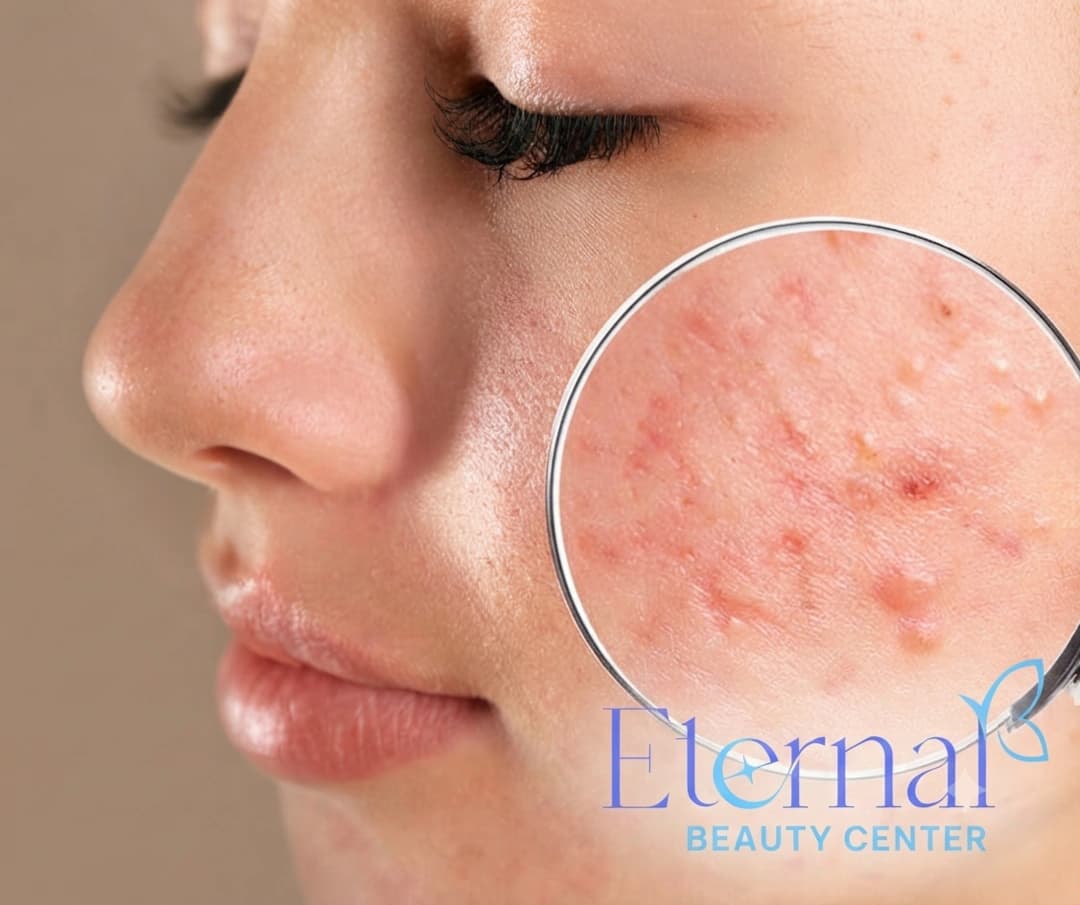
The five best-evidenced actives for melasma are Hydroquinone (2–4%, the long-standing gold standard, prescription-grade), Tranexamic Acid (topical 2–5%, or oral 250mg twice daily under medical supervision), Azelaic Acid (15–20%, pregnancy-safe), Vitamin C (L‑ascorbic acid, an antioxidant used in the morning) and Niacinamide (4–5%, which blocks melanosome transfer). Most work by inhibiting the enzyme tyrosinase or by interrupting the transfer of melanin pigment into skin cells — but no single ingredient "cures" melasma. Melasma is a chronic, relapsing pigmentary condition, so daily photoprotection is the non-negotiable base of every routine, and visible improvement usually takes 8–12 weeks or more with patience.
This article is a compare-and-combine guide to melasma actives — the deep dive on the ingredient toolkit for readers who have already read the overview, Melasma: causes and treatment, and want to know exactly what to use, at what strength, and how to pair them. It draws on guidance from the American Academy of Dermatology (AAD), DermNet NZ, StatPearls (NCBI) and systematic reviews on the US National Library of Medicine (PMC), combined with real clinical experience at Eternal Beauty Center, a skincare clinic in Go Vap, Ho Chi Minh City.
Table of contents
1. Ground rules before you pick an active 2. Quick comparison of the 5 melasma actives 3. Hydroquinone — the prescription gold standard 4. Tranexamic Acid — the rising star, topical and oral 5. Azelaic Acid — gentle and pregnancy-safe 6. Vitamin C — antioxidant and sunscreen's best friend 7. Niacinamide — blocking pigment transfer 8. Honorable mentions: cysteamine, kojic, arbutin, retinoids & the Kligman trio 9. A sample AM/PM routine for melasma-prone skin 10. The "niacinamide cancels vitamin C" myth 11. When topicals plateau: E‑Mela & Mela Peel 12. Frequently asked questions (FAQ) 13. Key takeaways
Ground rules before you pick an active
Before discussing any melasma active, remember three medical rules that decide whether the whole routine succeeds or fails: photoprotection is the mandatory base, melasma is chronic and relapsing, and expectations must be realistic over time. Skip these and even the "strongest" ingredient will let the pigment return.
Photoprotection is the base, not an option. UV light — and even visible light (including blue light) — drives melanocytes to make melanin. DermNet NZ recommends a broad-spectrum SPF 50+ sunscreen containing iron oxides to shield visible light too, year-round, plus physical cover. Without correct sun protection, every brightening active is effectively neutralized. See the detailed guide, How to use sunscreen correctly.
Melasma is chronic and relapse-prone. DermNet notes melasma is "slow to respond to treatment, especially if it has been present for a long time," and "pigmentation may reappear on exposure to sun." The realistic goal is to control and fade, then maintain — not "treat it once and it's gone."
Expect results over time. Most topical actives need 8–12 weeks or more to show a clear difference. Quitting early or constantly switching products is a common reason melasma doesn't improve.
One more key point: many of the strongest actives (Hydroquinone, oral Tranexamic Acid, Retinoids) require a doctor's prescription and monitoring. They have real contraindications and side effects — buying and self-applying (or self-dosing) is not automatically safe.
Quick comparison of the 5 melasma actives
Use this as a fast reference for the big picture — mechanism, typical concentration, best pairings and cautions for each active. The sections below go deeper.
| Active | Primary mechanism | Typical concentration | When to use | Pairs well with | Key caution |
|---|---|---|---|---|---|
| Hydroquinone | Inhibits tyrosinase (blocks melanin synthesis) | 2–4% (sometimes up to 5%) | Night | Tretinoin + steroid (Kligman trio) | Prescription only; cycle and time-limit use; risk of ochronosis with prolonged overuse |
| Tranexamic Acid | Anti-inflammatory, anti-angiogenic, reduces melanocyte activity | Topical 2–5%; oral 250mg twice daily | AM/PM (topical) | Vitamin C, Niacinamide, HQ | The oral form must be doctor-prescribed — contraindicated in people at risk of clots |
| Azelaic Acid | Tyrosinase inhibition; selectively toxic to abnormal melanocytes | 15–20% | AM/PM | Niacinamide, retinoid (at night) | Pregnancy-safe; ochronosis unlikely; may sting mildly at first |
| Vitamin C (L‑ascorbic acid) | Antioxidant + tyrosinase inhibition | 10–20% | Morning | Sunscreen, Vitamin E, Niacinamide | Oxidizes easily — choose a stable, airtight formula; boosts sunscreen |
| Niacinamide | Blocks melanosome transfer from melanocytes to keratinocytes | 4–5% | AM/PM | Vitamin C, Tranexamic Acid, HQ | Gentle, well tolerated; good for sensitive skin |
How to read the table: the actives act at different steps of pigment production — some block the "factory" (tyrosinase inhibitors: HQ, azelaic, vitamin C), one blocks the "delivery" step (niacinamide), and one dampens the "inflammation and blood-vessel" signals that feed melasma (tranexamic acid). That is why combining several correctly usually beats one high-dose active.
Hydroquinone — the prescription gold standard
Hydroquinone (HQ) is the most-studied skin-lightening agent and is still considered the "gold standard" for melasma, working by inhibiting tyrosinase — the key enzyme in melanin production. The treatment concentration is usually 2–4% (some prescription formulas go up to 5%).
HQ shines most in the Kligman triple combination — Hydroquinone 4% + Tretinoin 0.05% + a mild corticosteroid (Fluocinolone acetonide 0.01%). This formula (branded Tri‑Luma, FDA-approved in the US) is regarded in the literature as a first-line option for melasma, clearing or markedly improving roughly 60–80% of cases according to DermNet.
Safety notes — why HQ needs a doctor:
Cycle it, time-limit it. HQ should not be applied continuously long term. The risk of exogenous ochronosis (a paradoxical, hard-to-treat blue-black darkening) rises with use beyond about six months, in darker skin, and at higher concentrations. Doctors typically prescribe it in courses with breaks, or rotate to another active for maintenance.
The corticosteroid in the Kligman trio reduces irritation and boosts efficacy, but misused or prolonged use can thin skin and cause telangiectasia — so medical monitoring is essential.
HQ is a prescription drug in many countries; avoid unregulated "mixed" creams with high, unlabeled HQ.
Bottom line: HQ is highly effective but double-edged — use it as a doctor-directed course with a clear endpoint, not an indefinite daily moisturizer.
Tranexamic Acid — the rising star, topical and oral
Tranexamic Acid (TXA) is the standout melasma active of the past decade thanks to a multi-modal mechanism: anti-inflammatory, anti-angiogenic and melanocyte-calming — targeting the blood-vessel component of melasma that many other actives don't reach. Biologically, TXA inhibits the plasminogen–plasmin pathway, reducing the signals (prostaglandins, growth factors) that drive melanin production.
TXA comes in three forms, and this is where people get confused:
Topical 2–5%: safe for daily use, often paired with Vitamin C and Niacinamide. Systematic reviews on PMC report topical TXA achieving efficacy comparable to or better than hydroquinone with fewer irritant reactions.
Oral 250–500mg twice daily: the most commonly studied dose is 250mg twice a day. This is an option for widespread or resistant melasma — but it must be prescribed and monitored by a doctor. TXA reduces fibrinolysis, so it is contraindicated in anyone with a history of or risk for thrombosis (blood clots, embolism); those on hormonal contraception need careful assessment. Common side effects are mild GI upset and menstrual changes.
Intradermal microinjection (mesotherapy): performed in-clinic.
The crucial distinction: topical TXA is a "cosmetic-shelf active," while oral TXA is a "drug." Do not buy oral TXA online to self-dose — the clotting risk is real.
Azelaic Acid — gentle and pregnancy-safe
Azelaic Acid (at 15–20%) is a tyrosinase inhibitor with a standout advantage: it is selectively toxic to overactive melanocytes, safe during pregnancy and breastfeeding, and virtually never causes ochronosis. It is the ideal choice for anyone who wants an effective melasma active that is gentler and safer than hydroquinone.
Because azelaic acid selectively targets abnormal melanocytes rather than suppressing everything, it rarely causes paradoxical darkening and can be used longer term. Beyond melasma, it is mildly anti-inflammatory — helpful for anyone dealing with both melasma and acne or post-inflammatory hyperpigmentation (PIH).
Usage note: it may sting, redden or itch mildly during the first few weeks; start slowly (every other day) and build up. Azelaic acid pairs well with niacinamide and can be worn in the daytime under sunscreen.
For pregnant women — a group prone to hormonal melasma (the "mask of pregnancy") — azelaic acid is usually the preferred active, whereas hydroquinone and retinoids should be avoided. Always ask your doctor before using any active during pregnancy.
Vitamin C — antioxidant and sunscreen's best friend
Vitamin C (as L‑ascorbic acid, 10–20%) treats melasma two ways: as an antioxidant that neutralizes UV-generated free radicals, and by inhibiting tyrosinase to reduce melanin formation — so it works best in the morning, paired with sunscreen. It is a safe, well-tolerated "starter" active suitable for almost everyone.
Because its mechanism is antioxidant, Vitamin C doesn't "bleach" as strongly as HQ, but it supports and amplifies sunscreen and other actives. Studies often combine Vitamin C with other brighteners (as in serums containing niacinamide, tranexamic acid, vitamin C and hydroxy acids), achieving results comparable to some hydroquinone regimens.
Practical notes:
L‑ascorbic acid oxidizes easily (turning yellow/brown signals it has degraded). Choose a stable, airtight, light-protected formula.
Use it in the morning, before sunscreen, to act as a daytime "antioxidant shield."
Pairing with Vitamin E and ferulic acid improves stability and efficacy.
Niacinamide — blocking pigment transfer
Niacinamide (vitamin B3, at 4–5%) works by a different mechanism: rather than inhibiting the melanin "factory," it blocks the transfer of melanosomes (pigment packets) from melanocytes to keratinocytes — reducing the pigment that surfaces on the skin. Because it acts at a different step, niacinamide pairs extremely well with tyrosinase inhibitors.
Its big advantage is being gentle, well tolerated and suitable for sensitive skin. Beyond brightening, it strengthens the skin barrier, reduces redness and regulates oil — which is why it appears in so many combination melasma formulas. Trials using 4–5% niacinamide twice daily, alone or combined, show a meaningful reduction in melanin pigmentation.
Niacinamide is one of the most "safe-to-combine" actives: it plays nicely with Vitamin C, Tranexamic Acid, Azelaic Acid or Hydroquinone — which is exactly why it features in most modern melasma serums.
Honorable mentions: cysteamine, kojic, arbutin, retinoids & the Kligman trio
Beyond the five pillars, a few more actives are worth considering — usually in a supporting, rotating or alternative role:
Cysteamine: a tyrosinase inhibitor that lowers melanocyte activity; useful in cases resistant to the Kligman trio. Meta-analyses show cysteamine is effective but not clearly superior to hydroquinone or tranexamic acid — a good alternative, not a miracle.
Kojic acid (1–2%): a mushroom-derived tyrosinase inhibitor, often combined into brightening formulas; can irritate sensitive skin.
Arbutin (α‑arbutin ~3%): a gentler "cousin" of hydroquinone, a slower tyrosinase inhibitor suited to maintenance.
Retinoids (tretinoin, night use): not a primary brightener, but they boost cell turnover and the penetration of other actives — and are part of the Kligman trio. Use at night, and avoid in pregnancy.
As for the Kligman trio (Hydroquinone + Tretinoin + mild corticosteroid) — as noted in Section 3, it is the guideline first-line regimen, highly effective (clearing/improving ~60–80%), but it must be doctor-prescribed and time-limited because of ochronosis risk and corticosteroid side effects.
If you're interested in in-clinic procedures that drive actives deeper, What is a chemical peel explains the role of peels in the context of hyperpigmentation.
A sample AM/PM routine for melasma-prone skin
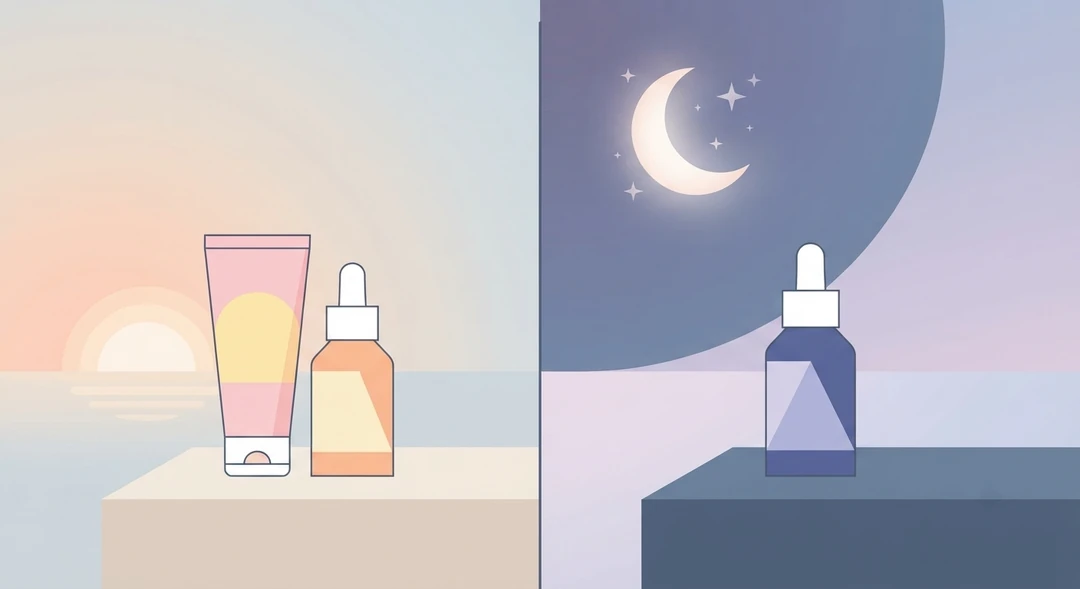
An effective melasma routine doesn't need many steps — it needs the right active at the right time: mornings prioritize antioxidants and sun protection, evenings prioritize the stronger brightening actives. Here is a sample framework (for reference — personalize it with your doctor):
| Step | Morning (AM) | Evening (PM) |
|---|---|---|
| 1 | Gentle cleanser | Gentle cleanser |
| 2 | Vitamin C (antioxidant) | Main active: Hydroquinone or Azelaic Acid or topical Tranexamic Acid |
| 3 | Niacinamide ± topical Tranexamic Acid | Retinoid (if doctor-prescribed; not in pregnancy) |
| 4 | Moisturizer | Niacinamide / Azelaic Acid (if not used in step 2) |
| 5 | Sunscreen SPF 50+ with iron oxides (mandatory) | Repairing moisturizer |
Safe-combining principles:
Don't stack too many strong actives at once — it invites irritation. For example, don't layer a retinoid plus several strong acids in one night before your skin is used to them.
Start slowly (every other day) with the more irritating actives (retinoid, azelaic, HQ), then build up.
The daytime sunscreen step is non-skippable — if you can only do one thing, protect from the sun.
With Hydroquinone and Retinoids, follow a doctor's course with a defined endpoint — don't use them indefinitely.
The "niacinamide cancels vitamin C" myth
"Niacinamide cancels out Vitamin C" is largely a myth for modern formulations. The idea traces back to very old (1960s) research using high heat and pure raw materials in a lab, which produced a niacin-forming reaction that causes mild flushing. In today's cosmetic formulas — at room temperature and stabilized — the two are safe together and even complementary (both brighten, both are antioxidant-adjacent).
Many modern melasma serums deliberately combine Vitamin C + Niacinamide + Tranexamic Acid in a single product. If you're still cautious, you can separate them by time (Vitamin C in the morning, Niacinamide at night) — but that's a comfort choice, not a scientific requirement.
A few other myths to drop:
"Stronger / higher concentration is always better." False — excessive strength only increases irritation without a matching efficacy gain, and can worsen melasma through inflammation.
"No need for sunscreen if you're using melasma actives." Completely false — without sun protection, every active fails.
"Melasma will clear completely and never come back." Not true — melasma is chronic and needs maintenance.
When topicals plateau: E‑Mela & Mela Peel
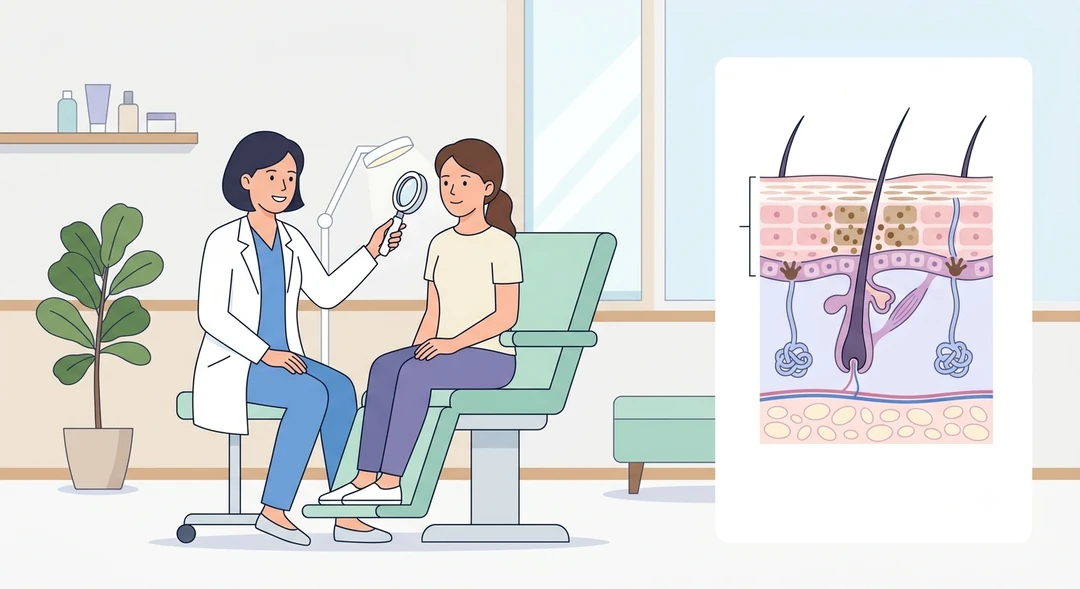
Topical actives handle most superficial-to-moderate melasma well. But for deep, long-standing, mixed-type or resistant melasma, topicals alone often plateau — and that's when deeper in-clinic care, under a dermatologist's assessment, is needed.
At Eternal Beauty Center (Go Vap, HCMC), a dermatologist (Dr. Lê Hiền) personally examines the skin, classifies the melasma type, then personalizes the protocol:
E‑Mela — for resistant cheek melasma: a non-invasive melasma protocol developed by Dr. Lê Hiền, using next-generation Resorcinol (a tyrosinase inhibitor) to target pigment deeper than 200 cell layers — where topicals and ordinary peels struggle to reach. No peeling, no ablation, no heat; suited to long-standing, resistant, mixed-type cheek melasma. Preceded by a dermatologist exam and melasma-type classification before the protocol is personalized.
Mela Peel — a specialized pigment peel: a peel tailored for hyperpigmentation, helping address surface pigment and marks.
A commitment to realistic expectations: after the skin exam, the doctor gives an honest forecast of improvement and the timeline needed; we never promise "clear melasma in one session" — treating melasma is a process combining at-home actives, in-clinic procedures and diligent sun protection. Results vary from person to person.
Frequently asked questions (FAQ)
Which active ingredient works best for melasma?
There is no single "strongest" active for everyone. Hydroquinone (2–4%) is still considered the gold standard and the most potent, usually within the Kligman trio (HQ + tretinoin + mild corticosteroid) with roughly 60–80% improvement — but it requires a prescription and time-limited use. Tranexamic Acid, Azelaic Acid, Vitamin C and Niacinamide are effective, gentler options. In practice the most effective approach is correctly combining several actives under a doctor's guidance, on a mandatory foundation of sun protection.
Does niacinamide really cancel out vitamin C?
Largely a myth. The idea comes from very old lab research using high heat and pure raw materials. In modern, stabilized cosmetics, Niacinamide and Vitamin C are safe together and even complementary. If you're still concerned, you can use Vitamin C in the morning and Niacinamide at night — but that's optional, not required.
Is oral tranexamic acid safe for melasma?
Oral tranexamic acid (usually 250mg twice daily) has evidence of efficacy for widespread or resistant melasma, but it must be prescribed and monitored by a doctor. Because it reduces fibrinolysis, it is contraindicated in anyone with a history of or risk for clots (thrombosis, embolism). Don't self-dose it. The topical form at 2–5% is safe for daily home use.
How long until melasma actives work?
Most topical actives need about 8–12 weeks or more to show clear improvement, and long-standing melasma is even slower. Consistency and correct maintenance matter more than constantly switching products. If several months of correct use bring no improvement, see a dermatologist to reassess the plan.
Can I use melasma actives during pregnancy?
Ask your doctor first. Hydroquinone and retinoids (tretinoin) are generally advised against in pregnancy. Azelaic Acid is considered a safer, often preferred choice for pregnancy melasma (the "mask of pregnancy"), alongside strict sun protection. Never self-medicate with oral drugs while pregnant.
Is sunscreen really necessary if I'm using melasma actives?
Absolutely — it is a mandatory step. UV and visible light stimulate melanin, so skipping sun protection neutralizes every brightening active. DermNet recommends a broad-spectrum SPF 50+ sunscreen with iron oxides, used year-round, plus physical cover.
When are topicals not enough, and I need in-clinic care?
When melasma is deep, long-standing, mixed-type or resistant, topicals tend to plateau. At that point, see a dermatologist to assess and consider deeper protocols such as E‑Mela (next-gen Resorcinol, non-invasive, targeting deep-layer pigment) or Mela Peel. Note that lasers and strong peels carry a risk of relapse and making melasma more resistant if done wrong, so they need a doctor's direction.
Key takeaways
Treating melasma with actives is a matter of "the right ingredient, the right concentration, the right combination, and enough patience" — on a mandatory base of sun protection. The most important points to remember:
The five pillars: Hydroquinone (gold standard, prescription), Tranexamic Acid (safe topically, oral needs a doctor), Azelaic Acid (gentle, pregnancy-safe), Vitamin C (antioxidant, morning) and Niacinamide (blocks pigment transfer).
Combining several actives at different steps usually beats one high-dose active.
"Niacinamide cancels vitamin C" is largely a myth for modern formulations.
SPF 50+ sunscreen with iron oxides is the foundation — without it, every active fails.
Melasma is chronic and relapse-prone; improvement takes 8–12 weeks or more; the strong actives (HQ, oral TXA, retinoids) need a doctor.
When topicals plateau on deep/resistant melasma, consider deeper protocols like E‑Mela or Mela Peel under a doctor's assessment.
Book a skin exam & melasma-plan consultation at Eternal Beauty Center
Not sure which active to use, how to combine them, or has long-standing melasma stopped improving? A dermatologist at Eternal Beauty Center will examine your skin, classify the melasma type, then advise a personalized protocol — with an honest forecast of the timeline.
Hotline / Zalo: 0334 713 610
Address: Go Vap, Ho Chi Minh City
Explore the services: E‑Mela — for resistant cheek melasma · Mela Peel — specialized pigment peel
Read more: Melasma: causes & treatment · How to use sunscreen correctly
Medical disclaimer: This article is for informational purposes and does not replace an individual examination, diagnosis or medical advice. Actives such as Hydroquinone, oral Tranexamic Acid and Retinoids must be prescribed and monitored by a doctor; efficacy and suitability vary by person, melasma type, severity and skin. Please consult a dermatologist before starting any regimen, especially if you are pregnant, breastfeeding or at risk of blood clots.