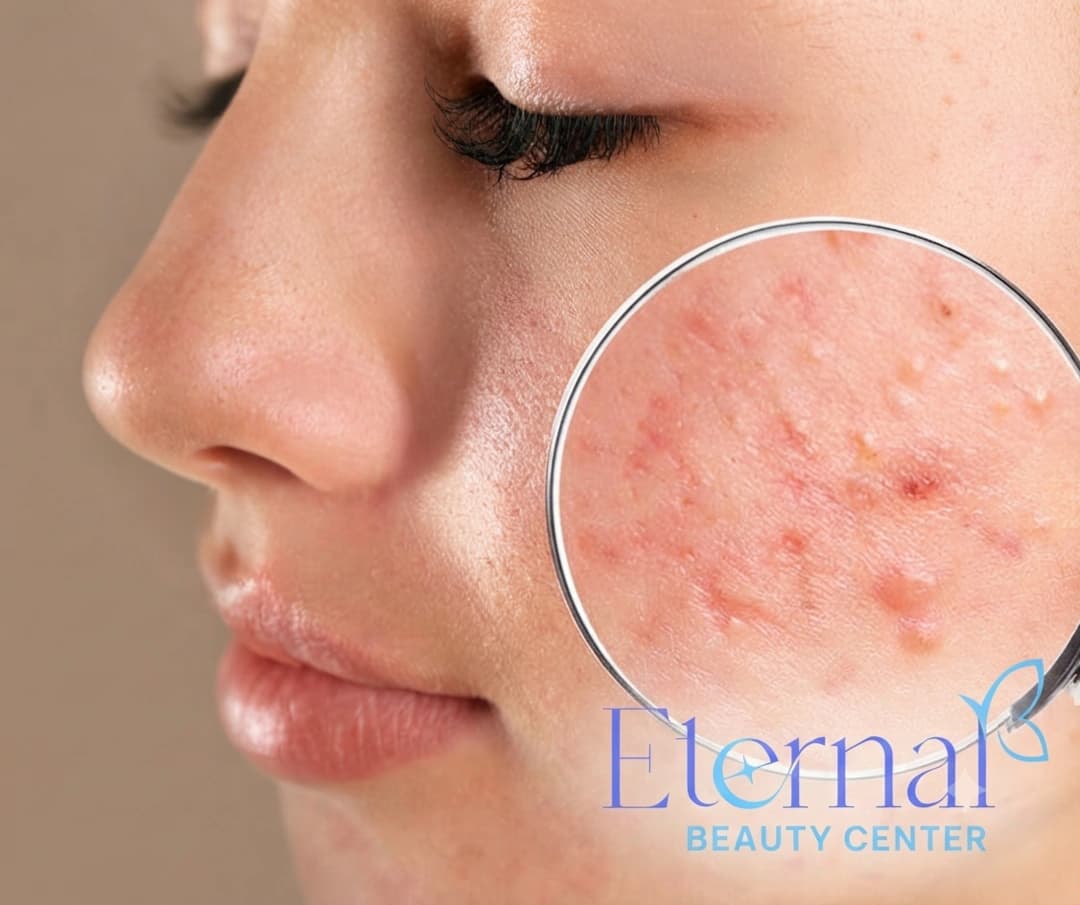
Postpartum melasma — also called hormonal melasma or the "mask of pregnancy" (chloasma) — is symmetrical hyperpigmentation across the cheeks, forehead, nose bridge, and upper lip that appears during or after pregnancy, when high levels of estrogen and progesterone drive pigment cells (melanocytes) to overproduce melanin. It is extremely common: according to Cleveland Clinic, up to 15–50% of pregnant women develop pregnancy melasma, and about 90% of all melasma cases occur in women, usually starting between ages 20 and 40. The good news is that in many women the patches fade within a few months after giving birth as hormones normalize; but in a substantial share they persist or keep relapsing, becoming chronic melasma that needs proper treatment.
This article answers the questions so many new mothers are searching for: why postpartum melasma happens, whether it goes away on its own, and — most importantly — how to treat it safely while you're still breastfeeding. You'll get a clear comparison table of actives that are safe while breastfeeding versus those to wait on until after weaning, the non-negotiable rules of sun protection, and a stage-by-stage roadmap. The content draws on the American Academy of Dermatology (AAD), Cleveland Clinic, DermNet, and review articles in the U.S. National Library of Medicine (PMC), combined with real-world melasma experience at Eternal Beauty Center, a skin clinic in Go Vap District, Ho Chi Minh City. This is a deep-dive (spoke) within the melasma content cluster; for the full overview of every cause and treatment, read the pillar guide Melasma: causes and treatment.
Important medical note: If you are pregnant or breastfeeding, consult your doctor before using any melasma active — including over-the-counter products. This article is informational and does not replace a personal exam.
What is postpartum melasma?
Postpartum melasma is melasma that begins or worsens because of the hormonal shifts of pregnancy and the period after birth. When it appears during pregnancy, the medical literature calls it chloasma — or by its familiar nickname, the "mask of pregnancy" — because the pigment patches are often distributed symmetrically across the face like a mask.
At its core, melasma is an acquired hyperpigmentation disorder presenting as brown to grey-brown patches with irregular borders, appearing on the most sun-exposed areas: the cheeks, forehead, nose bridge, chin, and upper lip. DermNet notes that melasma is most common in people with Fitzpatrick skin types III–IV (skin that tans easily, brown skin) — which describes most Vietnamese women, making this group both more prone to melasma and more likely to have darker, harder-to-clear patches.
A few numbers put it in perspective:
Melasma affects women in about 90% of cases, typically starting between ages 20 and 40 (Cleveland Clinic) — squarely the childbearing years.
Up to 15–50% of pregnant women develop pregnancy melasma (Cleveland Clinic).
Genetics play a strong role: roughly 33–50% of people with melasma have an affected relative (Cleveland Clinic); DermNet reports up to 60% with a family history.
The key thing to understand up front: melasma is not "dirty skin," not simply sun damage, and not the result of "caring for your skin wrong." It is a pigment disorder with a clear hormonal–UV–genetic mechanism. Because it has a mechanism, melasma can be controlled — but for a breastfeeding mother, the approach must be safe for both mother and baby first.
Why does postpartum melasma happen? The hormonal mechanism
The core cause of postpartum melasma is that elevated pregnancy hormones over-stimulate the skin's pigment cells. In the second and third trimesters, the body sharply raises estrogen, progesterone, and melanocyte-stimulating hormone (MSH); the placenta also contributes to MSH. These hormones tell melanocytes — the cells that make the pigment melanin — to speed up, producing the melasma patches.
Recent literature has clarified each hormone's role:
Progesterone appears to be a prominent factor in pregnancy melasma. Indirect evidence: postmenopausal women on hormone replacement therapy containing progesterone are more likely to develop melasma, while those on estrogen alone seem less likely to.
Estrogen and MSH also contribute to increased melanin production in the pregnancy hormonal environment.
This is exactly why estrogen/progesterone-containing birth control or hormone therapy can trigger or worsen melasma — the same mechanism as pregnancy. Cleveland Clinic lists hormones (pregnancy, contraceptives) among the main cause groups; DermNet notes that hormonal factors (pregnancy, oral contraceptives, IUDs, implants, hormone therapy) are implicated in about one-quarter of affected women.
But hormones don't act alone. Melasma is a multifactorial disease, and the second decisive link is sunlight:
UV radiation and even visible light — including blue light from screens — activate melanocytes to produce pigment. Sun both triggers, worsens, and sustains melasma. This is why melasma in hot, sunny climates like Vietnam tends to be darker and more stubborn.
Genetics set each person's threshold for developing melasma.
Heat (cooking over a stove, very hot showers) can also stimulate pigment in someone already prone to melasma.
Understanding this explains a crucial point: although hormones are the "trigger," sun protection is the link you can control every single day — and it is the mandatory foundation of any approach to postpartum melasma (see Section 5).
Does postpartum melasma go away on its own?
The honest answer: it can, but not reliably. In many women, once hormones normalize after birth, melasma fades over a few months — Cleveland Clinic notes that pregnancy melasma "will likely fade within three months after you're no longer pregnant." However, in a substantial share of women, melasma does not disappear on its own and lingers for months to years, or relapses whenever they get sun exposure, become pregnant again, or use hormones — becoming chronic, relapsing melasma.
Why does postpartum melasma clear in some women but not others? Part of the answer lies in the depth of the pigment. DermNet classifies melasma by layer, and this predicts how well it responds:
| Melasma type (by depth) | Features | Response to treatment |
|---|---|---|
| Epidermal | Well-defined dark-brown borders, sits superficially | Responds well |
| Dermal | Light-brown to blue-grey, ill-defined, sits deep | Responds poorly, hard to clear |
| Mixed | A combination of both, the most common | Partial improvement |
An important thing to accept up front: melasma has no "cure it once and it's gone" fix. Cleveland Clinic states plainly that "there is no definitive treatment that will automatically make melasma disappear." The realistic goal is to fade it substantially, control it, and prevent relapse — not erase it permanently. Anyone promising to "cure postpartum melasma 100%, never to return" is overstating.
For breastfeeding mothers there is an extra layer to consider: many of the strongest actives are precisely the ones to avoid during this period. So the sensible strategy is usually: sun protection plus safe actives now, and save the stronger methods for after weaning (see Sections 6 and 7).
Telling hormonal melasma apart from freckles, sunspots, and dark marks
Many mothers treat the wrong problem because they confuse melasma with other pigment issues. Correct identification is the first step to choosing the right approach — because each has a different mechanism and treatment.
| Feature | Melasma | Freckles | Sunspots (lentigo) | Post-inflammatory dark marks (PIH) |
|---|---|---|---|---|
| Shape | Large patches, irregular borders | Tiny round dots | Well-defined brown spots | Marks exactly where old acne/injury was |
| Location | Symmetrical cheeks, forehead, upper lip | Nose, cheeks | Long-term sun-exposed areas (hands, face) | Anywhere previously inflamed |
| Main driver | Hormones + sun + genetics | Genetics + sun | Cumulative sun with age | Inflammation (acne, injury) |
| Pregnancy-related | Yes — often triggered/worsened | Not specifically | No | No |
| Tendency | Prone to relapse, chronic | Darkens with sun | Increases with age | Fades over months if sun is avoided |
A few key distinctions:
Melasma vs post-acne marks. Melasma is a pigment patch driven by hormones and sun; post-acne dark marks (PIH) sit exactly where the old pimple or inflammation was and usually fade over time if you avoid sun. If you're not sure whether your discoloration is melasma or a dark mark, Why do dark marks linger after a pimple has healed? explains post-inflammatory pigmentation so you can compare.
Melasma vs freckles. Freckles are small scattered dots with a genetic basis, unrelated to pregnancy; melasma is a larger symmetrical patch.
Melasma vs sunspots. Sunspots (solar lentigines) result from cumulative sun with age, typically in older people and on the hands and face.
This distinction is not just about naming — it determines the active, the intensity, and the timing of any intervention. It's also why a skin exam and melasma classification by a doctor is worth more than guessing and buying products off an advertisement, especially while you're breastfeeding.
Rule number one while breastfeeding: sun protection
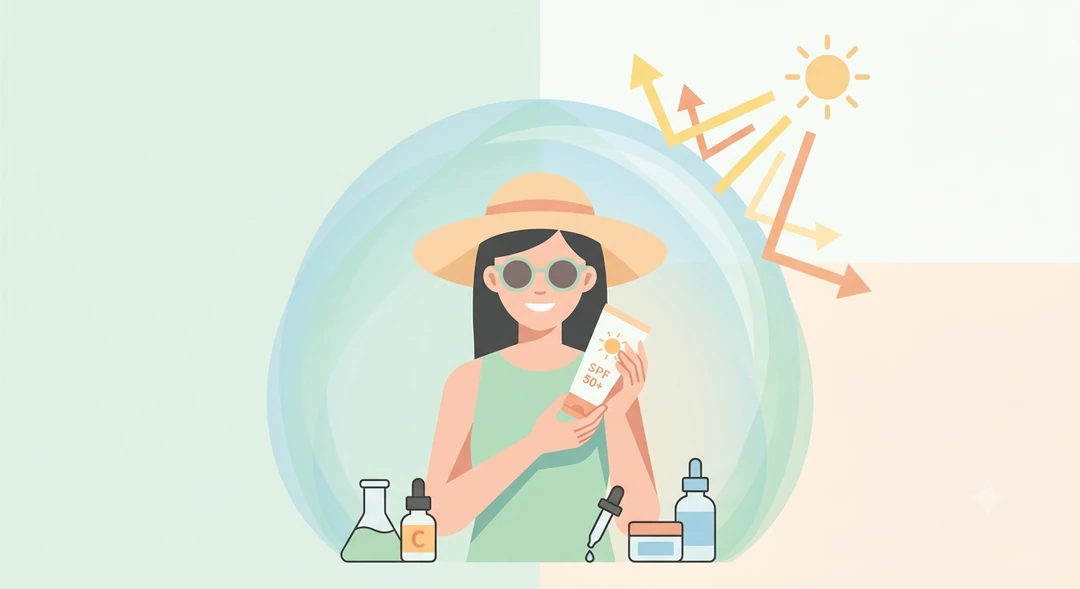
Sun protection is the single most important melasma treatment, completely safe for a breastfeeding mother, and something you should start today even before using any active. Because sunlight triggers, worsens, and sustains melasma, without sun protection every other method is wasted effort.
Guidance from Cleveland Clinic and DermNet is specific:
Use a broad-spectrum SPF 30–50 sunscreen, preferably one containing iron oxides, because it also blocks visible light — a melasma trigger that ordinary sunscreens miss.
Reapply every 2 hours when outdoors.
Combine with a wide-brimmed hat, a face mask, and sunglasses — physical shielding.
Sun protection for melasma is year-round and lifelong, not just on scorching days.
Topical sunscreen — including mineral (zinc oxide, titanium dioxide) or iron-oxide formulas — is considered safe while breastfeeding because it is barely absorbed into the bloodstream. For how to choose and use sunscreen correctly on melasma-prone skin, see How to use sunscreen correctly — the foundation for any skin with hyperpigmentation.
One point for Vietnamese mothers: everyday heat and sun (standing at the stove, hanging laundry, picking up children at midday) add up fast. Prioritizing shade and avoiding peak sun hours of 10 a.m.–3 p.m. is a nearly free and completely safe way to control melasma while nursing.
Safe actives vs those to wait on until after weaning
While breastfeeding, sort melasma actives into two groups: those generally considered safe to use now, and those to wait on until after weaning — or to use only under a doctor's supervision. The principle is to favor actives with low systemic absorption and existing safety data.
Below is a comparison based on AAD, Cleveland Clinic, DermNet, and PMC reviews. This is reference guidance — always confirm with your own doctor before using anything.
| Active / method | Status while breastfeeding | Notes |
|---|---|---|
| Broad-spectrum sunscreen (with iron oxides) | ✅ Safe — top priority | Barely absorbed; the mandatory foundation |
| Azelaic acid | ✅ Safe — preferred | Widely regarded as the safest topical while breastfeeding; inhibits tyrosinase, brightens melasma |
| Topical vitamin C | ✅ Generally considered safe | Antioxidant, brightening, supports sun protection |
| Niacinamide | ✅ Generally considered safe | Reduces pigment transfer to the surface, soothes skin |
| Alpha-arbutin, kojic acid (gentle strengths) | ⚠️ Usually well tolerated — ask your doctor | Mild brightening; safety data more limited |
| Hydroquinone | ❌ Avoid | High skin absorption (about 35–45%); contraindicated in pregnancy and breastfeeding due to insufficient safety evidence |
| Topical retinoids / tretinoin, oral retinoids | ❌ Avoid | Not for use in pregnancy; while breastfeeding, avoid or use only on a doctor's advice |
| High-dose oral tranexamic acid | ❌ Wait until after weaning / only if a doctor prescribes | Studies typically exclude breastfeeding women, so caution applies |
| Strong chemical peels, strong lasers | ⚠️ Usually deferred until after weaning | Needs a doctor's assessment; prioritize safety and hormonal stability first |
In short, the "gold-standard" melasma formula DermNet cites — hydroquinone + tretinoin + a mild corticosteroid (achieving 60–80% improvement) — is exactly the trio to avoid while breastfeeding, since neither hydroquinone nor tretinoin is suitable in this period. That's why the safe strategy for new mothers is usually: use azelaic acid + vitamin C + niacinamide + sunscreen now, and save the stronger methods for after weaning.
A reminder: The list above is general reference guidance. Safety also depends on the specific formulation, concentration, and individual skin. Tell your doctor clearly that you are breastfeeding before starting any product.
A safe, stage-by-stage roadmap for postpartum melasma
The safest and most effective approach is staged: stabilize and protect while breastfeeding, then intervene more strongly after weaning. This respects your baby's safety and avoids wasting money on strong methods while hormones are still fluctuating (and relapse is likely).
Stage 1 — While breastfeeding: sun protection + safe actives + patience.
Broad-spectrum sunscreen with iron oxides, physical shielding, avoiding peak sun hours (Section 5).
Apply safe actives: azelaic acid, vitamin C, niacinamide — gentle brightening and soothing.
Care for the skin barrier, avoid friction, avoid high heat.
Don't expect melasma to vanish quickly in this stage — the goal is to keep it from worsening and to take advantage of its potential to fade as hormones gradually stabilize.
Stage 2 — After weaning: reassess and treat in depth.
If melasma persists (especially mixed or long-standing melasma), this is when a doctor may consider a stronger protocol: prescription actives, a pigment-specific peel, or an in-depth tyrosinase-inhibiting protocol.
A skin exam and melasma classification (epidermal / dermal / mixed) helps choose the right method and set realistic expectations.
Throughout both stages: sun protection never stops, and the mindset is control–maintain–prevent relapse, not "erase it once and done."
If you want an in-depth, non-invasive approach designed for resistant, long-standing, and mixed melasma — suitable to begin after weaning — see the E-Mela protocol in Section 10. For residual superficial pigment and dark marks, the Mela Peel protocol is a pigment-specific peel option.
Common myths about postpartum melasma
Many false beliefs cost mothers money, worsen melasma — or worse, lead to unsafe products while breastfeeding. Some of the most common:
"Postpartum melasma always goes away, so do nothing." Not necessarily. Some cases fade within months of birth, but a substantial share lasts for years or relapses. Early sun protection helps melasma fade more easily and keeps it from darkening.
"While breastfeeding, any melasma cream is fine — it's only on the skin." False and dangerous. Hydroquinone absorbs 35–45% through the skin; topical retinoids should also be avoided. "Topical" does not mean "absolutely safe" while breastfeeding.
"Melasma is caused by a weak or 'hot' liver." This folk belief has no clear scientific evidence. Melasma is a pigment disorder driven by hormones, sun, and genetics — not a "liver disease."
"The stronger the laser, the faster melasma clears." False. A poorly indicated or overly strong laser can cause melasma to rebound darker, especially on Vietnamese skin (Fitzpatrick III–IV) and during unstable hormonal periods. This needs a doctor's assessment and is usually deferred until after weaning.
"There's a product that cures postpartum melasma 100%, never to return." There isn't. Cleveland Clinic confirms there is no way to make melasma disappear completely; the realistic goal is substantial fading and relapse control.
"Oral melasma pills (tranexamic acid) are safe because they work from within." Don't self-prescribe. Studies of tranexamic acid typically exclude breastfeeding women — it needs a doctor's prescription and monitoring, usually left until after weaning.
When should you see a dermatologist?
Sun protection and safe actives can be applied at home. However, you should see a dermatologist when:
You are breastfeeding and want to use any melasma active stronger than sunscreen — to get advice on safe options and correct dosing.
Melasma hasn't faded after several months since giving birth, or is getting darker.
Melasma is widespread, symmetrical, and persistent — suggesting mixed/deep melasma that needs accurate classification.
You're not sure whether it's melasma or a dark mark / sunspot / freckles — because each needs a different approach.
You want to start an in-depth protocol after weaning and need a personalized plan with realistic expectations.
Melasma clearly affects your mental well-being and confidence postpartum.
An early exam helps you avoid using the wrong product (keeping your baby safe), choose the right time to intervene, and set the right expectations — the single most important thing so you aren't disappointed or drawn in by "guaranteed cure" advertising.
Postpartum melasma treatment at Eternal Beauty Center
At Eternal Beauty Center (Go Vap, HCMC), postpartum melasma is handled exactly in the spirit of this article: safety first — examine and classify the melasma — then individualize the protocol by stage. A dermatologist (Dr. Le Hien) personally assesses the skin, classifies the melasma (epidermal / dermal / mixed), and always asks clearly whether you are pregnant or breastfeeding before recommending any active.
While breastfeeding: we prioritize correct sun protection plus safe actives (azelaic acid, vitamin C, niacinamide), barrier care, and monitoring — waiting if needed, rather than rushing into strong intervention.
After weaning — for resistant, long-standing, mixed, and postpartum melasma: the E-Mela protocol is a non-invasive approach developed by Dr. Le Hien, using new-generation Resorcinol (a tyrosinase inhibitor) to target deep pigment (beyond 200 cell layers), with no peeling and no ablation, personalized after the doctor's exam and melasma classification.
For residual superficial pigment and dark marks: the Mela Peel protocol is a pigment-specific peel used alongside the main protocol.
Transparency and realistic expectations: after the skin exam, the doctor gives an honest forecast of improvement and the timeline; we do not promise "melasma gone in one session" or "a permanent cure with no relapse" — melasma is a chronic, relapsing condition that needs control and maintenance. For a breastfeeding mother, the most responsible path is to examine first, prioritize safety, and wait for the right time for stronger methods.
Frequently asked questions (FAQ)
Why does postpartum melasma happen?
Postpartum melasma (hormonal melasma, the "mask of pregnancy") occurs because pregnancy hormones — especially estrogen, progesterone, and MSH — rise sharply and stimulate pigment cells (melanocytes) to overproduce melanin. Sunlight (UV and visible light) and genetics trigger, worsen, and sustain it. Because it shares the same hormonal mechanism, estrogen/progesterone-containing birth control can also cause or worsen melasma.
Does postpartum melasma go away on its own?
It can, but not reliably. In many women, melasma fades within about three months of giving birth as hormones stabilize (per Cleveland Clinic). However, a substantial share lasts for months to years or relapses, becoming chronic melasma. Early sun protection helps it fade more easily and keeps it from darkening.
Can you treat melasma while breastfeeding?
Yes, but you must choose safe methods. You can use sun protection and actives generally considered safe — such as azelaic acid, vitamin C, and niacinamide — during breastfeeding. Stronger methods (hydroquinone, retinoids, high-dose oral tranexamic acid, strong lasers/peels) are usually best left until after weaning or used only when a doctor prescribes them. Always tell your provider you are breastfeeding before using any product.
Which melasma actives are safe while breastfeeding?
Options generally considered safe include: broad-spectrum sunscreen (preferably with iron oxides), azelaic acid (often preferred), vitamin C, and niacinamide. Gentle strengths of alpha-arbutin or kojic acid are usually well tolerated but worth checking with a doctor. Avoid hydroquinone (35–45% skin absorption) and retinoids/tretinoin during this period.
Can postpartum melasma be cured for good?
There is no way to make melasma disappear completely and permanently — Cleveland Clinic confirms this. Melasma is a chronic, relapsing condition, especially with sun exposure or hormonal change. The realistic treatment goal is to fade it substantially, control it, and prevent relapse — not a "100% permanent cure."
How long after giving birth does melasma fade?
In many people, melasma begins to fade within about three months of birth as hormones return to normal. But timelines vary widely: for some it takes a few months, for others it lasts years or doesn't clear on its own. Even with treatment, it usually takes several months of consistent use to see improvement — melasma requires patience.
Should you take oral melasma pills (tranexamic acid) while breastfeeding?
Don't self-prescribe. Studies of oral tranexamic acid typically exclude breastfeeding women, so there isn't enough safety data for this period. If it's being considered, it must be prescribed and monitored by a doctor, and is usually left until after weaning.
When should you start in-depth postpartum melasma treatment?
While breastfeeding, focus on sun protection and safe actives. In-depth protocols (prescription actives, pigment-specific peels, tyrosinase-inhibiting protocols like E-Mela) are usually considered after weaning, once hormones have stabilized — at which point a skin exam and melasma classification help choose the right method and set realistic expectations.
Key takeaways
Postpartum melasma (hormonal melasma, the "mask of pregnancy") is hyperpigmentation from pregnancy hormones stimulating pigment cells, combined with sun and genetics. The most important things to remember:
Postpartum melasma can fade within a few months as hormones stabilize, but a substantial share persists or relapses — don't be complacent.
Sun protection is step one, completely safe while breastfeeding, and the foundation of every approach.
While breastfeeding: safe now with azelaic acid, vitamin C, niacinamide, and sunscreen; wait until after weaning for hydroquinone, retinoids, high-dose tranexamic acid, and strong lasers/peels.
Melasma has no permanent cure — the realistic goal is to fade it substantially, control it, and prevent relapse.
The most responsible path for new mothers: examine first, disclose that you're breastfeeding, prioritize safety, and wait for the right time for stronger methods.
Book a skin exam & postpartum melasma consultation at Eternal Beauty Center
Struggling with postpartum melasma and unsure what to do while you're still breastfeeding? A dermatologist at Eternal Beauty Center will examine your skin, classify the melasma, advise on safe actives for your current stage, and outline a suitable in-depth plan for after weaning — with an honest forecast of results.
Hotline / Zalo: 0334 713 610
Address: 204 Street No. 1, Ward 16, Go Vap District, Ho Chi Minh City
Opening hours: 10:00 – 20:00 daily
Explore our services: E-Mela – Non-invasive melasma protocol · Mela Peel – Pigment-specific peel
Medical disclaimer: This article is for informational purposes and does not replace a personal exam, diagnosis, or medical advice. If you are pregnant or breastfeeding, consult your doctor before using any melasma active or method — including over-the-counter products. The "safe" and "avoid" lists here are general reference guidance; suitability depends on the specific formulation, concentration, and individual skin. Melasma treatment outcomes vary by melasma type, depth, and individual; no method guarantees complete clearance or freedom from relapse.