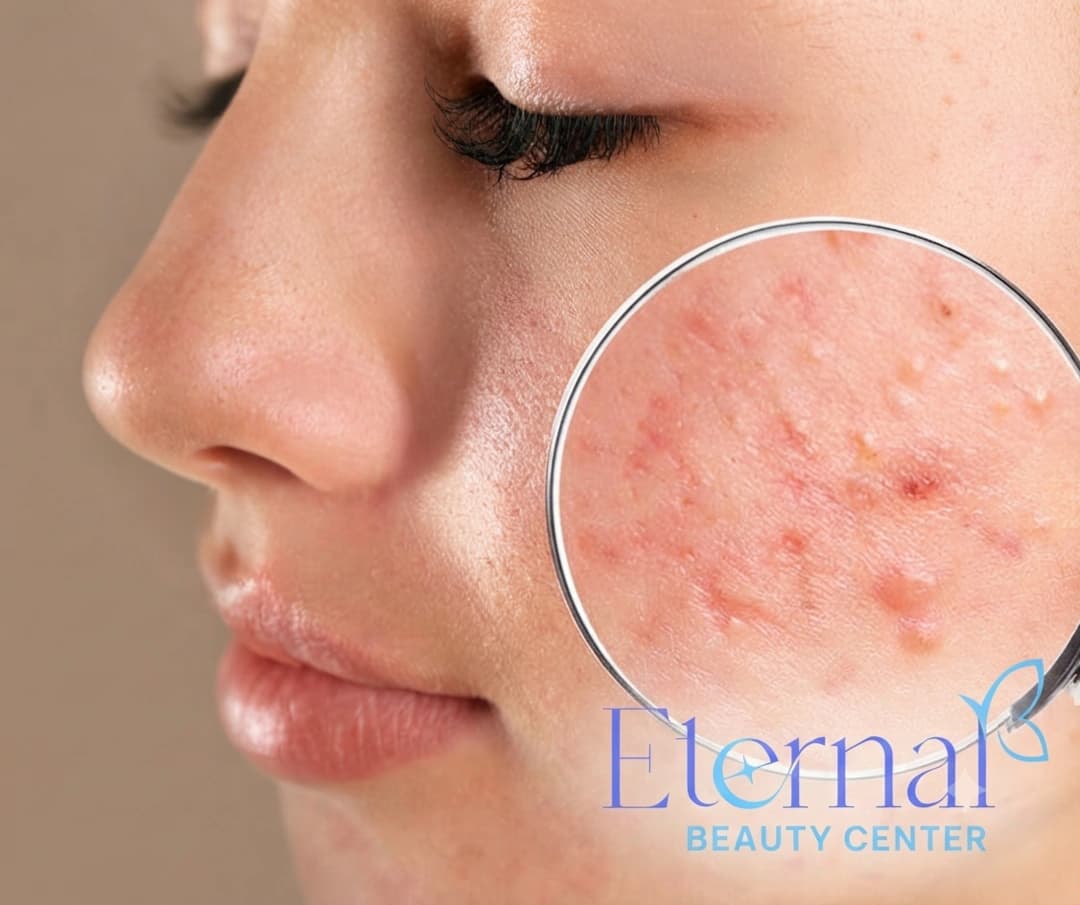
"Is there a cream that treats acne scars?" is one of the questions Dr. Le Hien hears most often during examinations. The question is entirely understandable, given a market full of products advertising the ability to "fill in acne scars" or "erase scars in 30 days", complete with striking before-and-after images.
However, when you look at the structure of the skin and the mechanism by which atrophic scars form, the answer from dermatological medicine is fairly blunt: topical products are almost never able to truly fill in atrophic scars. This article explains why, and also points out what at-home skincare can actually do and when medical methods are needed.
Where do acne scars sit in the skin's structure – and why this matters
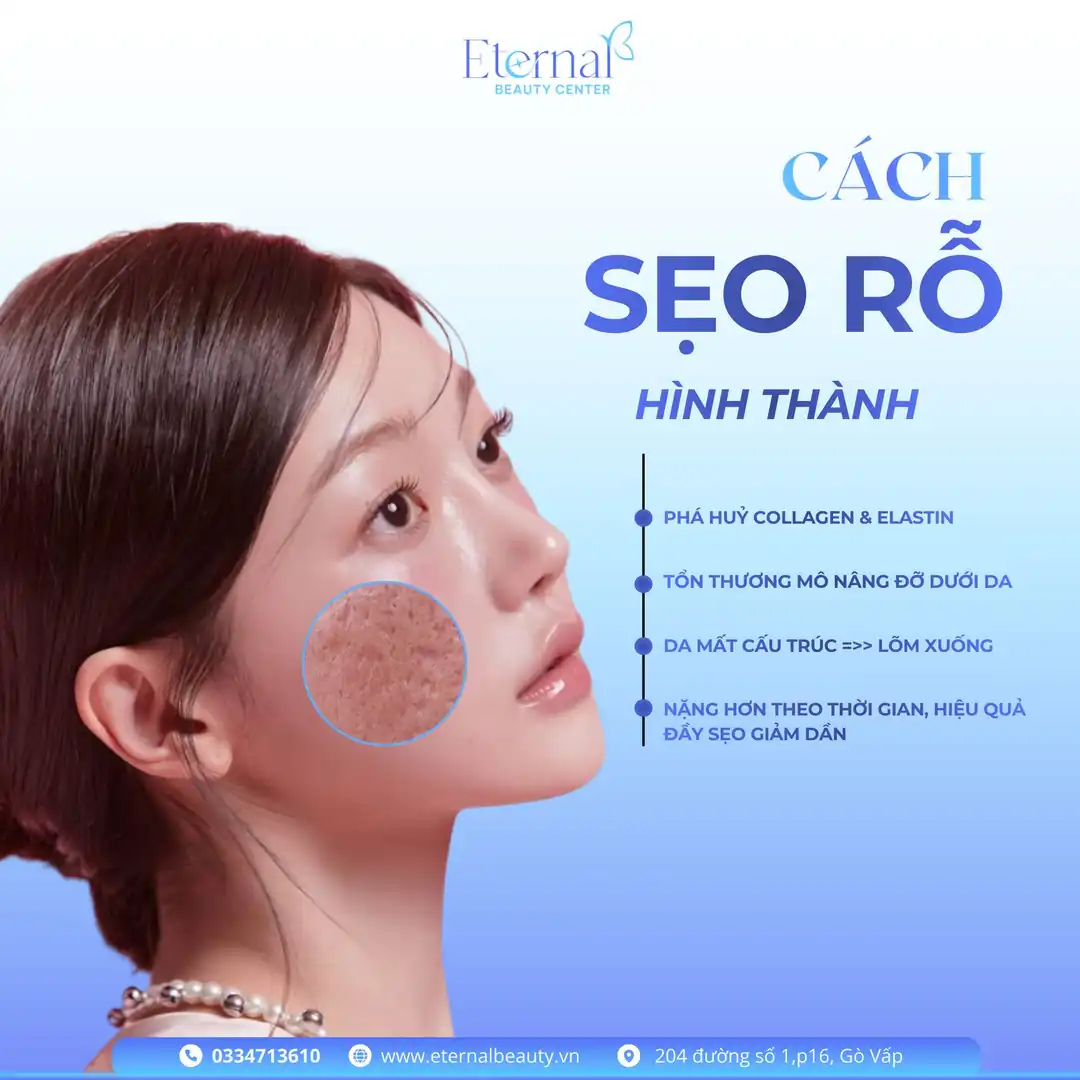
To understand why creams cannot fill in atrophic scars, you first need to understand where the scar actually sits.
The skin has three main layers:
The epidermis – the outermost layer, about 0.05–0.1mm thick. This is the layer in contact with the environment and where most ordinary skincare products work
The dermis – the deeper layer, 1–4mm thick. This is where collagen, elastin, blood vessels, nerves and the skin's main supporting structures are found
The hypodermis – the deepest layer of fat and connective tissue
Atrophic scars form when severe acne inflammation destroys collagen and elastin in the dermis. When the supporting tissue there is lost, the skin's surface no longer has any support and collapses inward, forming depressions. Some scar types (such as rolling scars) also have fibrous bands tethering the scar base down to the tissue below, extending the damage deep into the subcutaneous layer.
The key point: the real damage is not on the skin's surface, but at a depth of 1–4mm below it.
Why most topical products cannot reach the scar damage
There are three mechanical and biological reasons:
First, molecular size. Most active ingredients in moisturisers have molecules that are too large to penetrate the skin's protective barrier and reach the deep dermis. The stratum corneum – the topmost layer of the epidermis – is specifically designed to block external substances from entering the body. This is a natural self-protection mechanism, but it is also a barrier for products that aim to "act deep".
Second, mechanism of action. Even ingredients that can penetrate more deeply (such as retinoids) mainly act on the epidermis and the superficial dermis – they stimulate cell renewal, produce mild collagen growth in the superficial layer and improve surface texture. But this effect is not enough to "fill in" a depression that runs 1–2mm into the dermis.
Third, the nature of the damage. Atrophic scars are not a problem of "missing a surface layer of skin". They are a loss of supporting structure within the dermis. To repair them, new connective tissue must be stimulated exactly where it was lost – which requires intervention in the dermis, beyond the reach of any ordinary topical product.
A visual example Dr. Le Hien often uses during examinations: if you compare an atrophic scar to a hole in a grass field, a cream is like watering the grass around the hole – it may make the grass greener, but it cannot fill the hole. To fill the hole, you have to add soil from the bottom up – that is, intervene exactly where the substance was lost.
So what do the ingredients advertised as "scar treatments" actually do
This is where a clear distinction is needed. Many skincare ingredients do have a certain value in caring for scarred skin, but their role is not to "fill in atrophic scars". Specifically:
Retinoids (Tretinoin, Retinol, Adapalene)
What they can do: Stimulate cell renewal, produce mild collagen growth in the superficial dermis, improve surface texture, reduce post-acne hyperpigmentation (PIH) and lower the risk of forming new scars while acne is present.
What they cannot do: Fill in scars that have already formed. The collagen-stimulating effect of retinoids is too mild and too superficial to make a meaningful change to deep depressions.
Their real role: An important ingredient in preventing new scars and helping maintain results after medical treatment.
Vitamin C (Ascorbic Acid and derivatives)
What it can do: Provide antioxidant protection, support collagen synthesis as a cofactor, brighten the skin and fade pigmentation.
What it cannot do: On its own, "rebuild" the dermal structure that has been lost in the scarred area. Vitamin C acts as a supporting "raw material", not a "tool" for regeneration.
Synthetic peptides
What they can do: Some peptides can send signals that stimulate cells to produce collagen to a certain degree. They help make skin firmer and smoother.
What they cannot do: Create a meaningful change in scars that have already formed. Their effect is mainly at the surface and overall-appearance level, not "filling in" depressions.
"Scar creams" on the market
Most topical products advertised as "acne scar treatments" actually improve the overall appearance of the skin (smoother, more hydrated, more even-toned), making the scars look "milder" to the naked eye. But under a specialised skin scanner or with before-and-after scar depth measurements, the change is usually very modest.
This does not mean these products are "bad" – they have a role in a skincare routine. The issue is simply that expectations need to be placed in the right spot.
What role does at-home skincare play in the acne scar journey
This is a commonly misunderstood point. Skincare is not "useless" in scar treatment – but its role is to support and maintain, not to be the main treatment.
A good at-home routine helps to:
Strengthen the skin's protective barrier – a prerequisite for the skin to respond well to medical procedures
Control active acne – preventing new scars from forming during the treatment of old ones
Reduce post-inflammatory hyperpigmentation (PIH) – a factor that often makes scars look "worse" than they are
Maintain results after the medical course is complete
Protect the skin from UV – sun protection is the single most important factor in preventing scars from becoming more visible over time
At Eternal, every client in a scar treatment course has their skincare routine adjusted by Dr. Le Hien at each phase – products to pause before a procedure, products for recovery, and maintenance products after the protocol is complete. This routine is personalised to the skin and the chosen intervention, not a single product set for every client.
When do acne scars truly need medical methods
The short answer: nearly every case of true atrophic scarring. Because, as analysed above, the damage lies in the dermis – which needs a mildly invasive (or sometimes stronger) intervention to rebuild the structure.
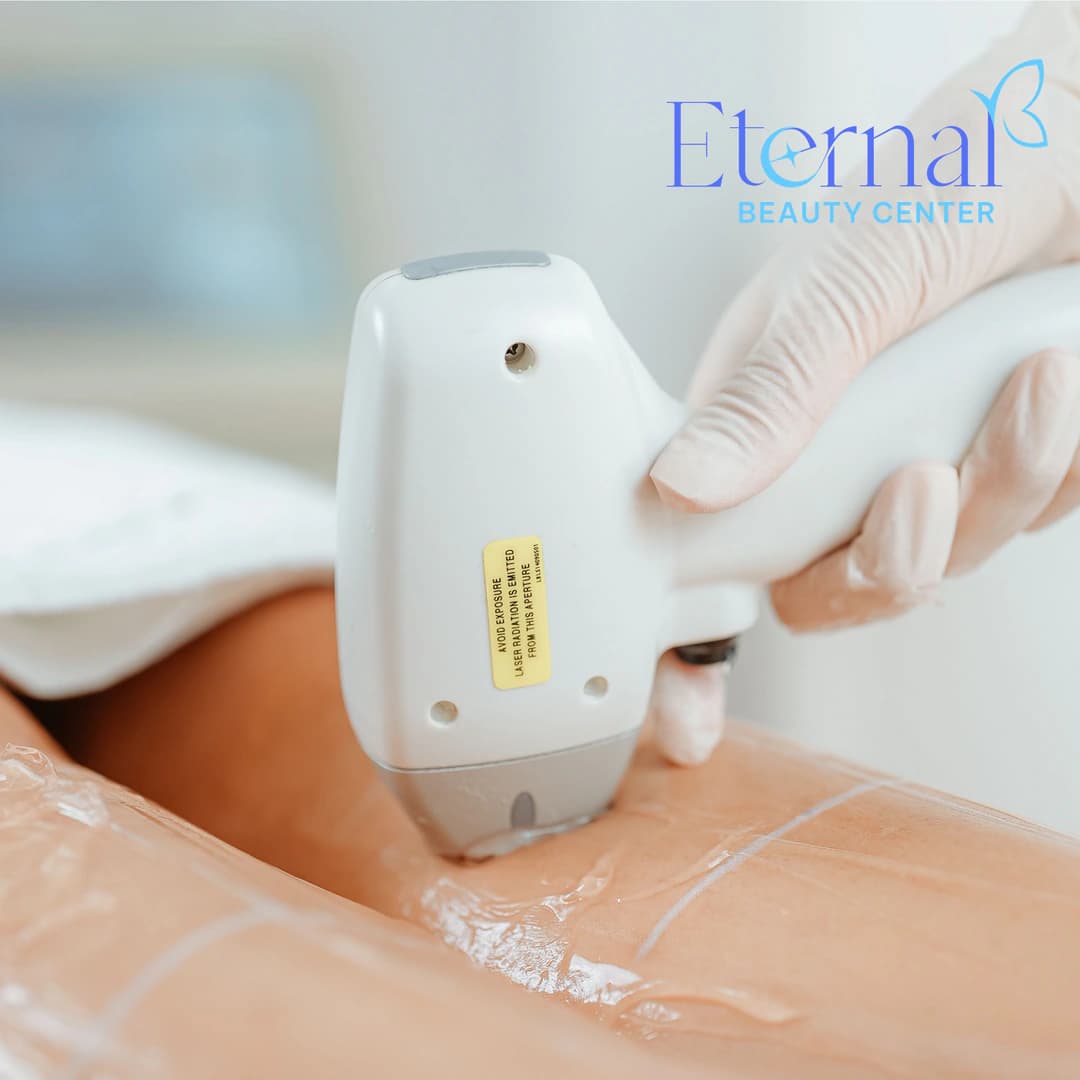
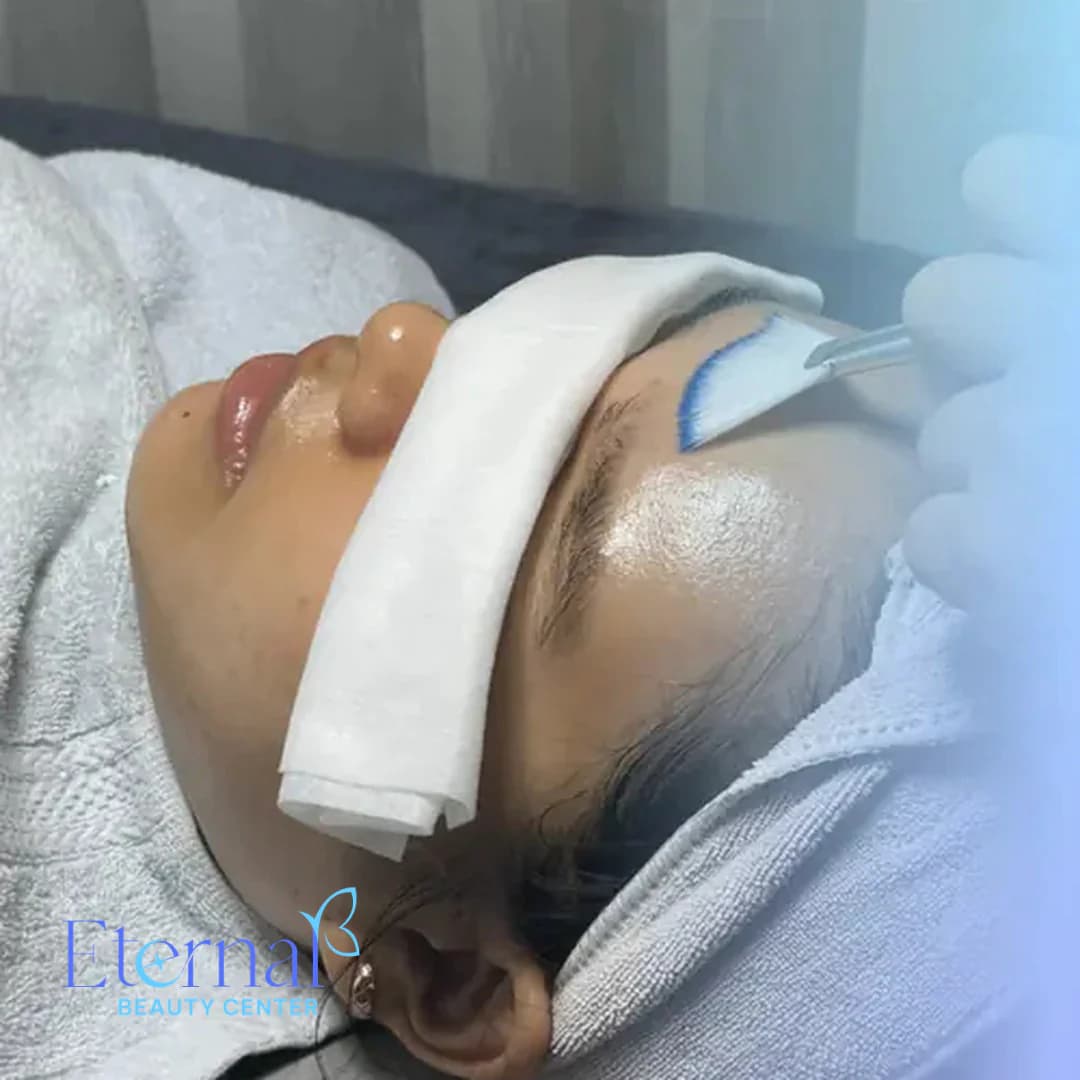
Effective medical methods all share one thing in common: they act directly on the dermis, stimulating collagen growth exactly where filling is needed, or releasing the fibrous bands that tether the scar base. At Eternal, Dermatologist Dr. Le Hien uses the following main methods, chosen according to each specific scar type:
TCA Cross – applying high-concentration TCA solution into the scar base to stimulate localised collagen regeneration. Suitable for ice pick scars
Subcision (subcision / fibrous band release) – using a specialised needle to cut the fibrous bands tethering the scar base down. Suitable for rolling scars – the core technique for this type
Microneedling – creating controlled micro-injuries in the dermis to stimulate collagen growth across the whole area
Scar Peel – helping smooth the surface and even out the tone of areas with shallow or newly formed scars
E-Scar (Eternal's multi-modal protocol) – combining Subcision + EGF Booster + Microneedling + point TCA Cross in a single session, for cases with several scar types at once or long-standing scars that have not improved with other methods
Each method has its strength for a specific scar type, and in practice they are usually combined in a multi-modal way within one protocol to treat several scar types at once. This is the current standard in aesthetic dermatology.
Why "trying at home first" often makes the journey longer
A common reality at Dr. Le Hien's examinations: many clients come to Eternal Beauty Center after trying many different products over months, even years, hoping to find the "right product". By the time they reach the clinic, beyond the scars still being intact, the skin may also have:
A weakened protective barrier from using too many strong, unsuitable actives
Irritation and sensitivity to many ingredients
Thicker fibrous tissue at the scar base from the prolonged time
Post-inflammatory hyperpigmentation from the lack of a proper sun-protection and recovery strategy
This situation makes the skin-preparation phase before scar intervention take longer, and the treatment response slower than for those who come early.
This does not mean you "must go to the clinic the moment you have a scar". But if after 2–3 months of at-home skincare you see no clear improvement, that is a signal to see a dermatologist rather than continue experimenting with new products.
When you come to the clinic – criteria worth considering
If you are looking for a dermatologist to treat atrophic scars methodically, there are a few criteria worth considering:
The examiner must be a dermatology specialist – not a sales consultant or technician standing in. Atrophic scars are a medical issue that needs a genuine clinical assessment
Skin analysis and specific scar classification before any protocol is proposed
Transparent pricing after the examination, with no unexpected charges
Not applying the same protocol to every client – each scar type needs its own technique, and every skin has different characteristics
Medical supervision from start to finish – from examination and treatment to aftercare
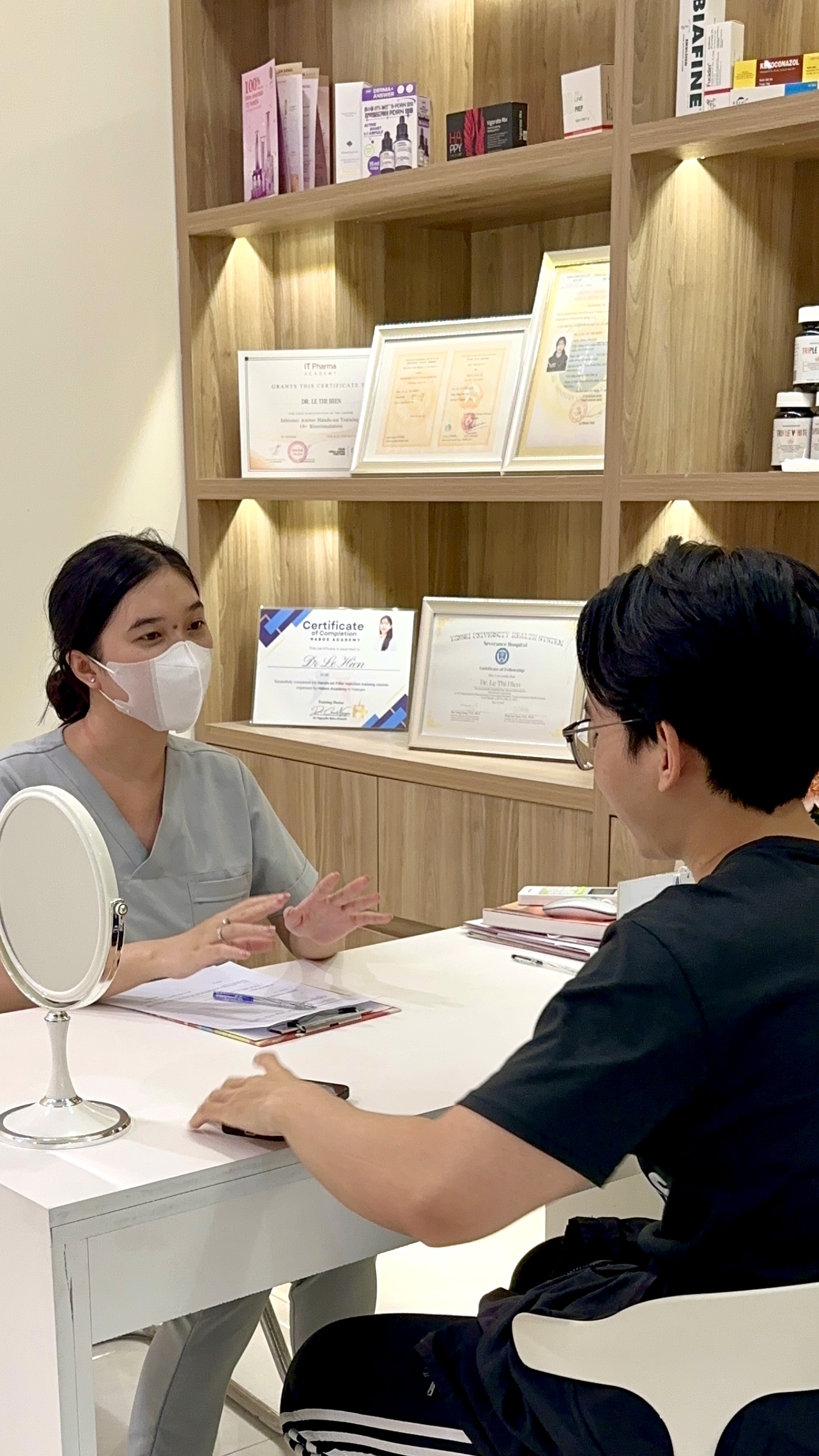
These are the principles Eternal Beauty Center has built since its founding, under the clinical direction of Dermatologist Dr. Le Hien (a graduate of the Vietnam Military Medical University in Hanoi, specialising in Dermatology and Medical Aesthetics). Every client who comes for medical acne scar treatment is examined 1:1 directly by Dr. Le Hien, with skin analysis, scar classification and a personalised protocol – with no consultant standing in.
The right approach from the start
To sum up, a sensible acne scar journey usually involves:
An examination with a dermatologist – classifying the scars, assessing the baseline skin and identifying the root cause if acne is still present
Controlling acne if it is still active – not treating scars while inflammation is not yet stable
Preparing the baseline skin – building a skincare routine suited to the current skin condition
Medical intervention under a personalised protocol – combining the appropriate techniques (TCA Cross, Subcision, Microneedling, E-Scar) for each scar type
Maintaining results with skincare and sun protection – this is where topical products truly come into their own
This approach saves time and cost and – most importantly – delivers real results instead of the unrealistic expectations set by advertising.
Book an examination and acne scar assessment at Eternal Beauty Center Go Vap
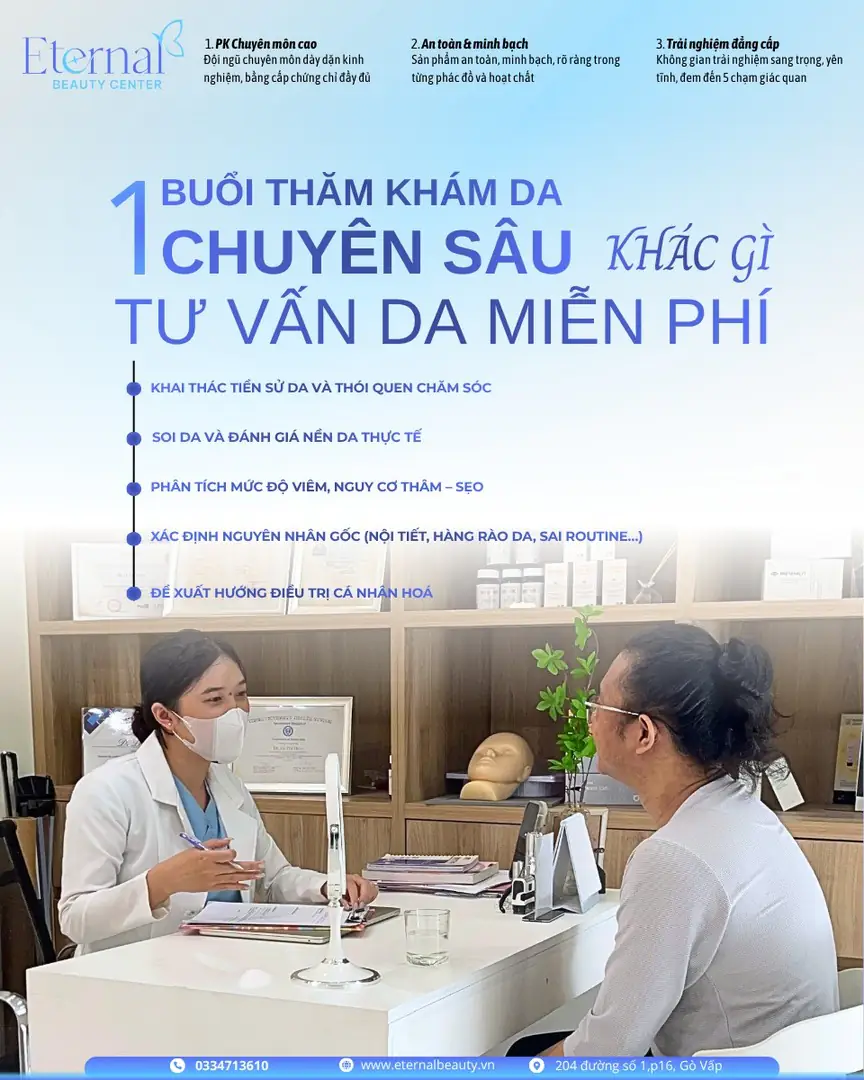
If you have tried many at-home approaches but your scars still have not improved noticeably, or you want to know which method truly suits your scar type – an examination with a dermatologist is the clearest next step.
At Eternal Beauty Center Go Vap, Dermatologist Dr. Le Hien personally examines, analyses the skin and builds a personalised protocol for each client. Eternal commits to:
A 1:1 examination directly with a dermatologist, not through a consultant
Specific scar classification (ice pick / boxcar / rolling) and baseline skin assessment using a specialised skin scanner
A personalised protocol for each scar type, with no fixed one-size-fits-all course
Transparent pricing after the examination, with no unexpected charges
Recommending only what is truly necessary for your current skin condition – no upselling
Learn more about the process and methods on the medical acne scar treatment service page.
Eternal Beauty Center Go Vap contact information:
Address: 204 Street No. 1, Ward 16, Go Vap District, Ho Chi Minh City (convenient for clients from Phu Nhuan, Tan Binh, Binh Thanh and District 12)
Hotline / Zalo: 0334 713 610
Opening hours: 10:00 – 20:00 daily
Website: www.eternalbeauty.vn
This article was produced with professional consultation from Dermatologist Dr. Le Hien – Eternal Beauty Center Go Vap.
The information shared by Eternal Beauty Center is intended for reference only and does not replace medical diagnosis or treatment. Results depend on each individual's condition and response. Clients should book an examination for personalised advice from a doctor.