Acne Peel – The 17-Step Medical Acne Protocol
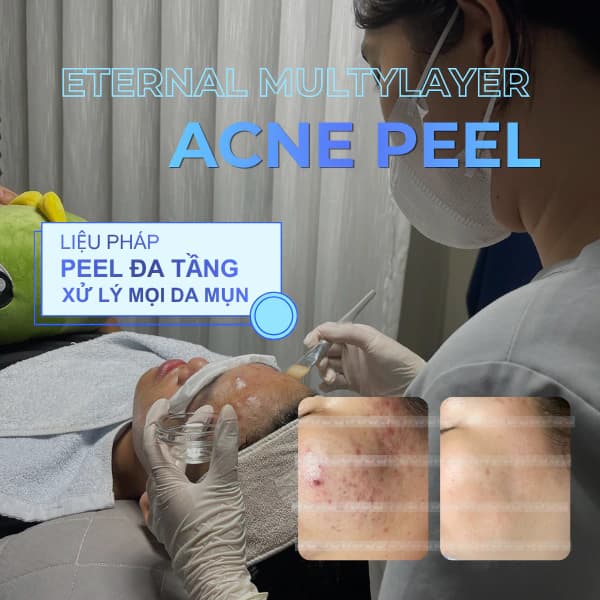
Acne Peel — a chemical peel for acne — is one of the few methods that act on several acne mechanisms at once in a single session: clearing follicles, calming inflammation, regulating sebum and driving renewal. At Eternal it is designed and supervised by a dermatologist across 17 medical-standard steps.
- Duration
- Treatment plan
- Performed by
- Location
What Acne Peel is and what it solves
Acne is never the result of a single mechanism. Acne-prone skin usually has at least three or four factors at once: clogged follicles, excess sebum, inflammation beneath the surface and disrupted cell turnover.
Acne Peel is a chemical peel that uses selected organic acids and modern actives such as AHA, BHA (mainly salicylic acid), PHA and retinoids, acting in a controlled way on the skin surface to address acne.
Unlike a typical spa peel focused on simple exfoliation, a clinic Acne Peel is designed to act on several acne mechanisms at once — suiting complex acne that needs a multi-mechanism approach rather than a surface-only fix.
How Acne Peel works
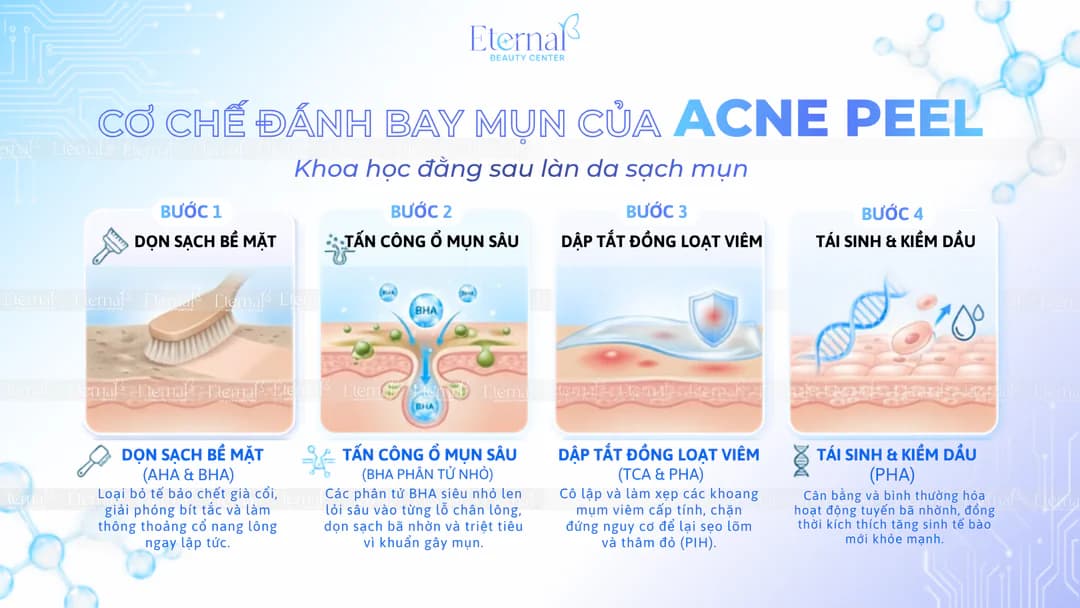
The concentration and blend of actives are adjusted by the doctor for each individual, based on stratum corneum thickness, level of inflammation, sensitivity and the dominant acne type. The service name is the same, but the formula on each client can differ.
The four mechanisms of Acne Peel
1. Deep pore cleansing
BHA (salicylic acid) is oil-soluble, so it reaches inside the follicle to clear the keratin plug — directly reducing comedones, whiteheads and blackheads, especially on chronically congested oily skin.
2. Limiting inflammation
Salicylic acid and retinoids have anti-inflammatory action, calming mild-to-moderate inflammatory spots and reducing the risk of deeper damage that leads to atrophic scarring later.
3. Sebum regulation
The peel thins the stratum corneum and acts on sebaceous activity, helping reduce oil in chronically congested oily skin — addressing one of the root causes of acne.
4. Stimulating renewal
Once the old cell layer is shed in a controlled way, renewal speeds up. New skin is more even in tone and smoother, and post-acne marks fade gradually over time.
When correctly indicated, a course of Acne Peel brings clear improvement in acne and surface smoothness. The procedure is gentle and painless, with no long downtime — most working clients can return to their normal routine the very next day.
Which skin is suitable for Acne Peel
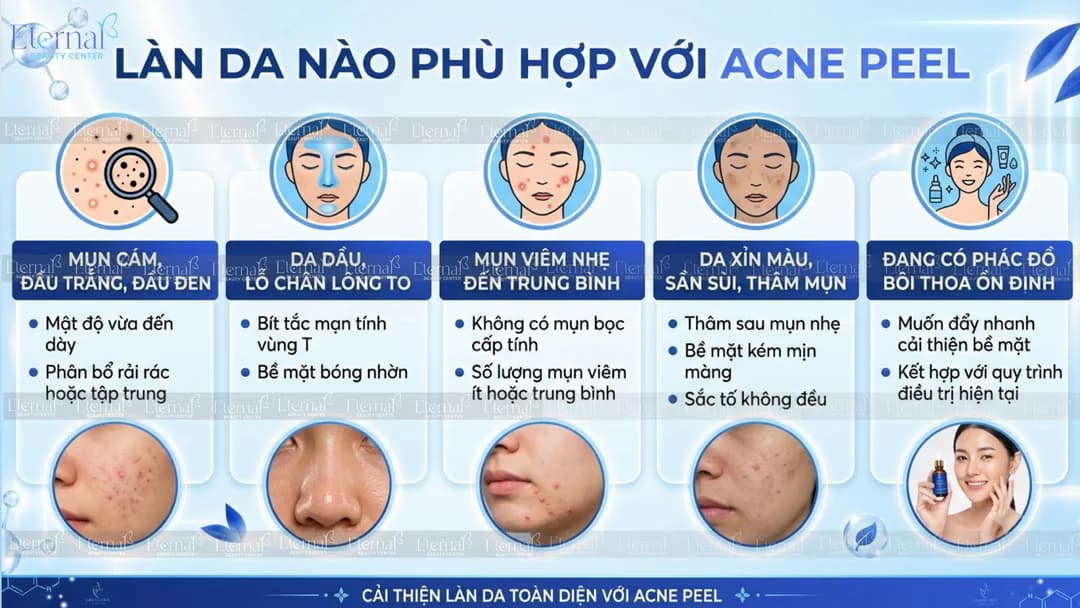
Acne Peel is best suited to the following conditions:
Best suited to
- Comedones, whiteheads and blackheads at moderate-to-high density.
- Oily skin, enlarged pores and chronic congestion in the T-zone.
- Mild-to-moderate inflammatory acne, without acute cystic lesions.
- Dull, rough skin with light post-acne marks.
- Those already stable on a topical routine who want faster surface improvement.
Some cases are unsuitable or need to be postponed: skin in a severe acute inflammatory flare, skin on oral isotretinoin within the last 6 months, open lesions, active eczema or rosacea, and pregnancy for retinoid-containing peels. This is why the first visit at Eternal always requires a doctor to assess in person before deciding the approach.
The medical-standard 17-step Acne Peel protocol at Eternal
The protocol is divided into three stages — Preparation (6 steps), Core treatment (7 steps) and Recovery (4 steps) — each with a clear goal and supervised by a dermatologist from start to finish.
The 17 steps
The whole protocol takes around 90 to 120 minutes. What matters is not the number of steps, but that each step has a specific purpose and is performed to medical standards.
Real results after a course
Below are some before-and-after images from Acne Peel courses at Eternal. These are outcomes from personalised protocols prescribed by a dermatologist; how much each person improves varies with skin condition, the cause of the acne and adherence.
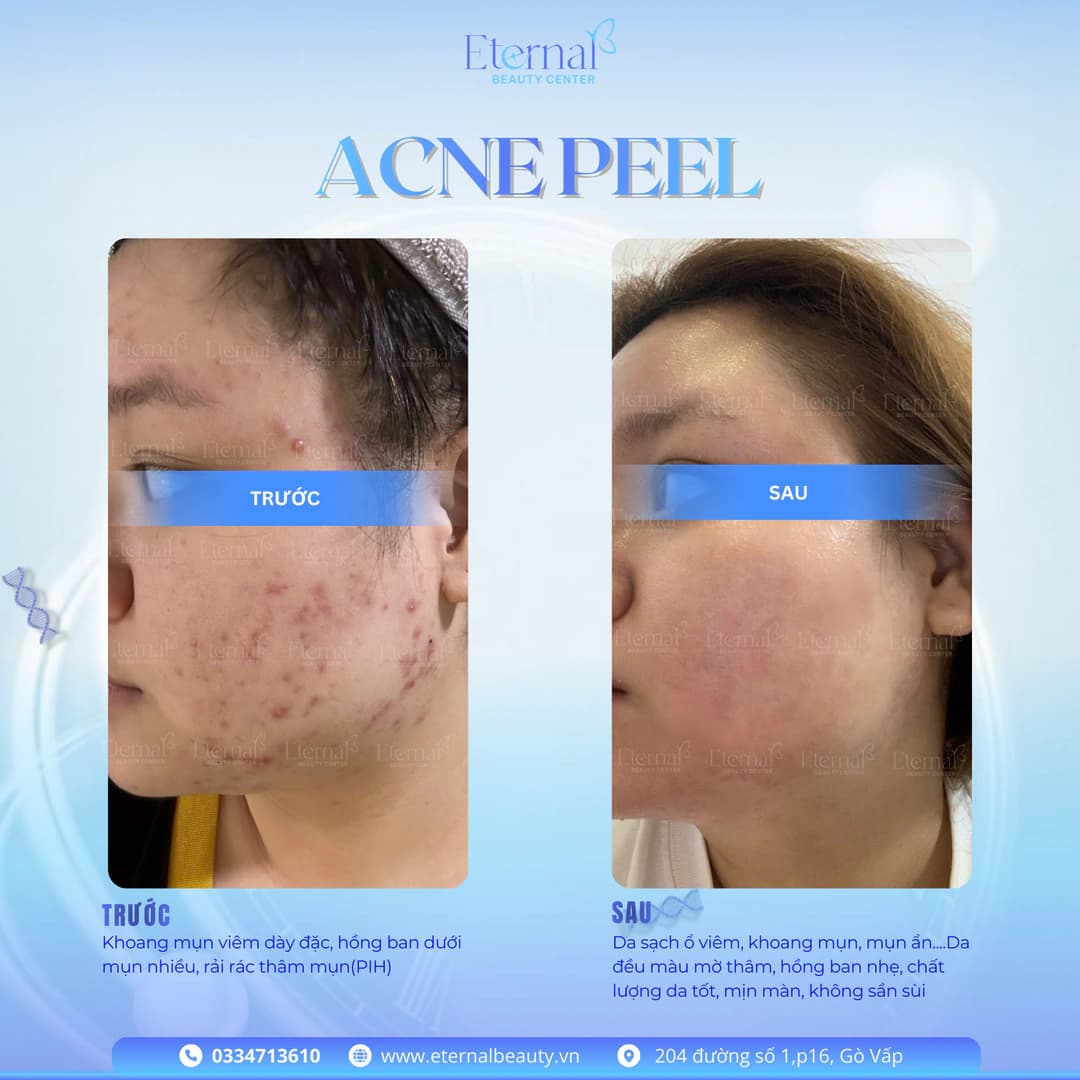
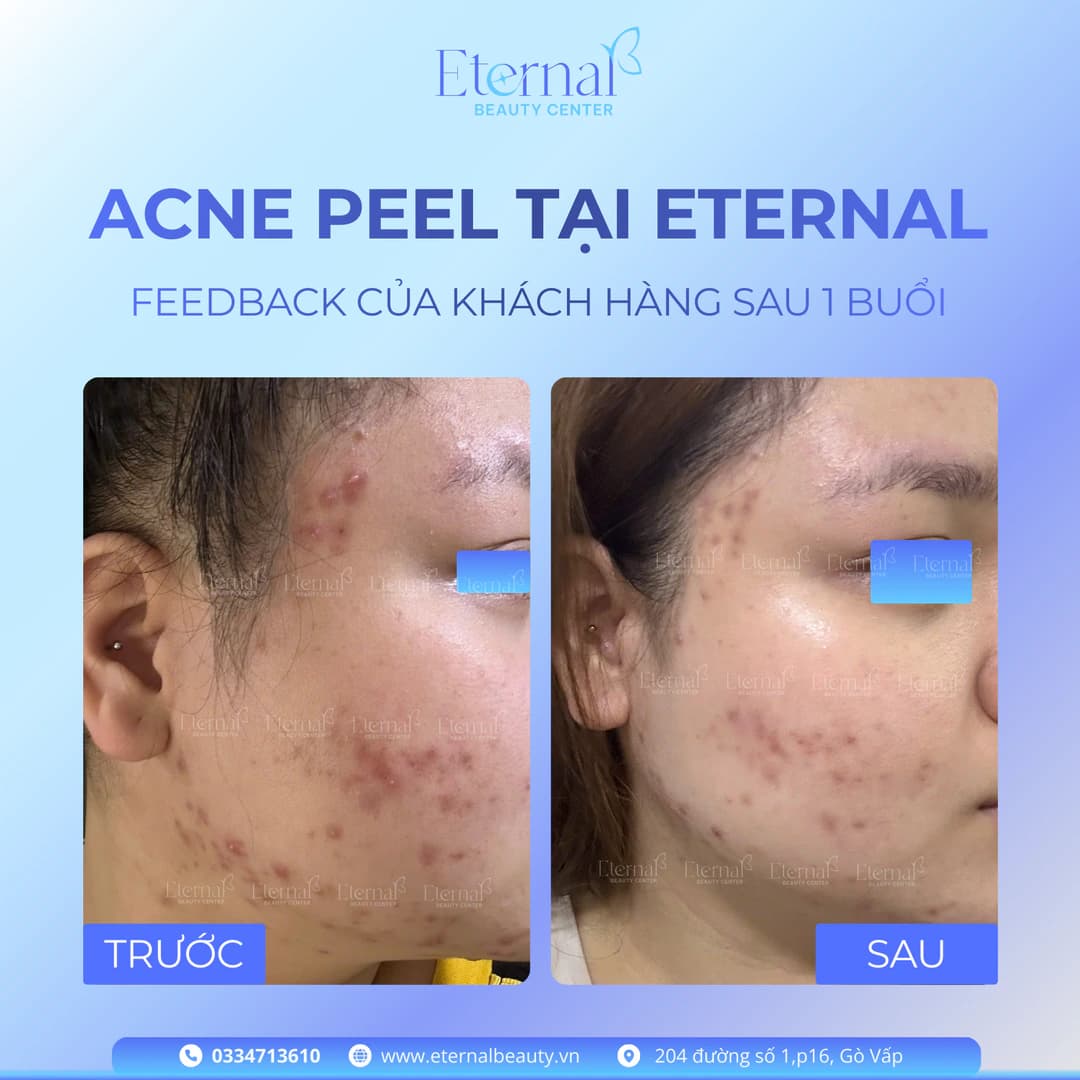
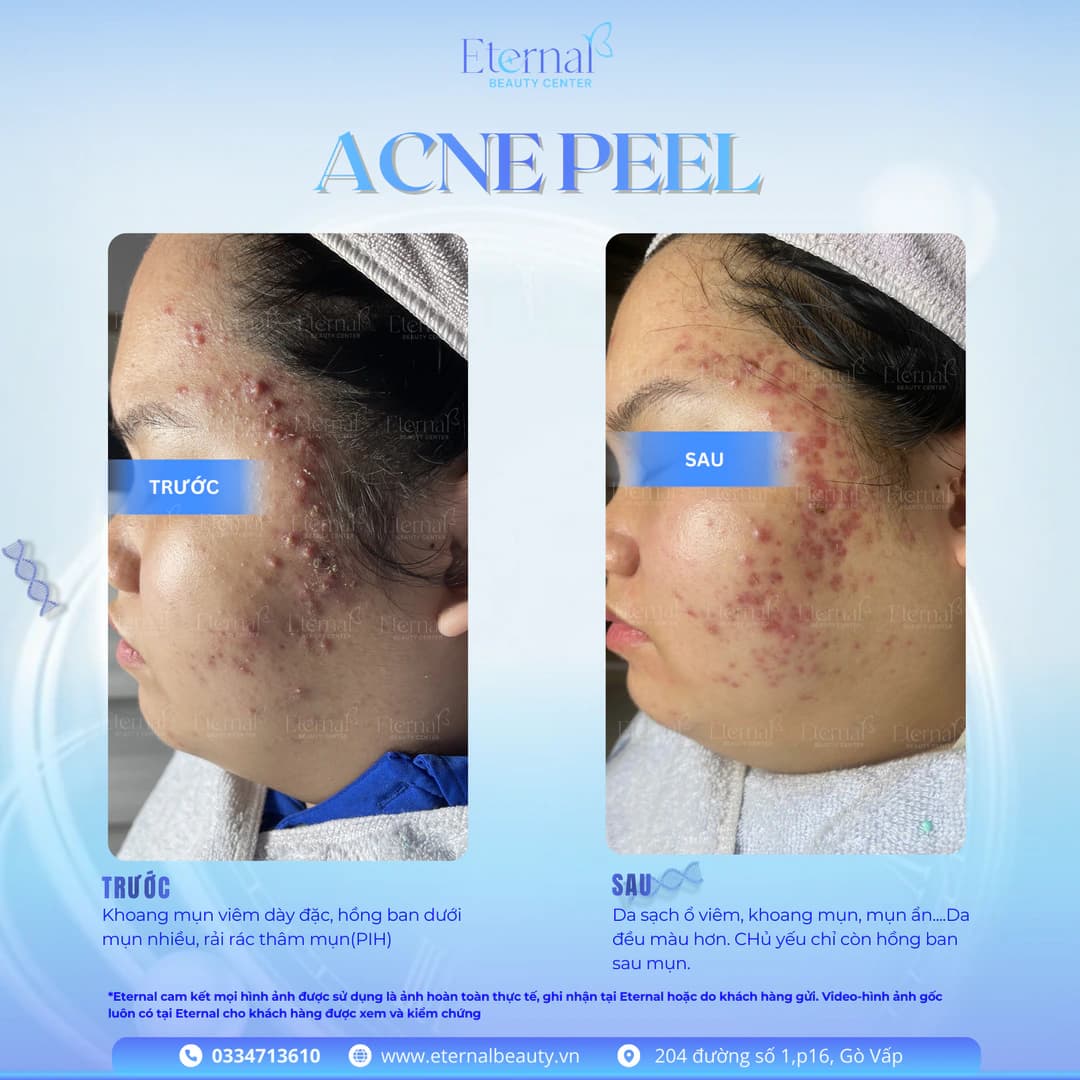
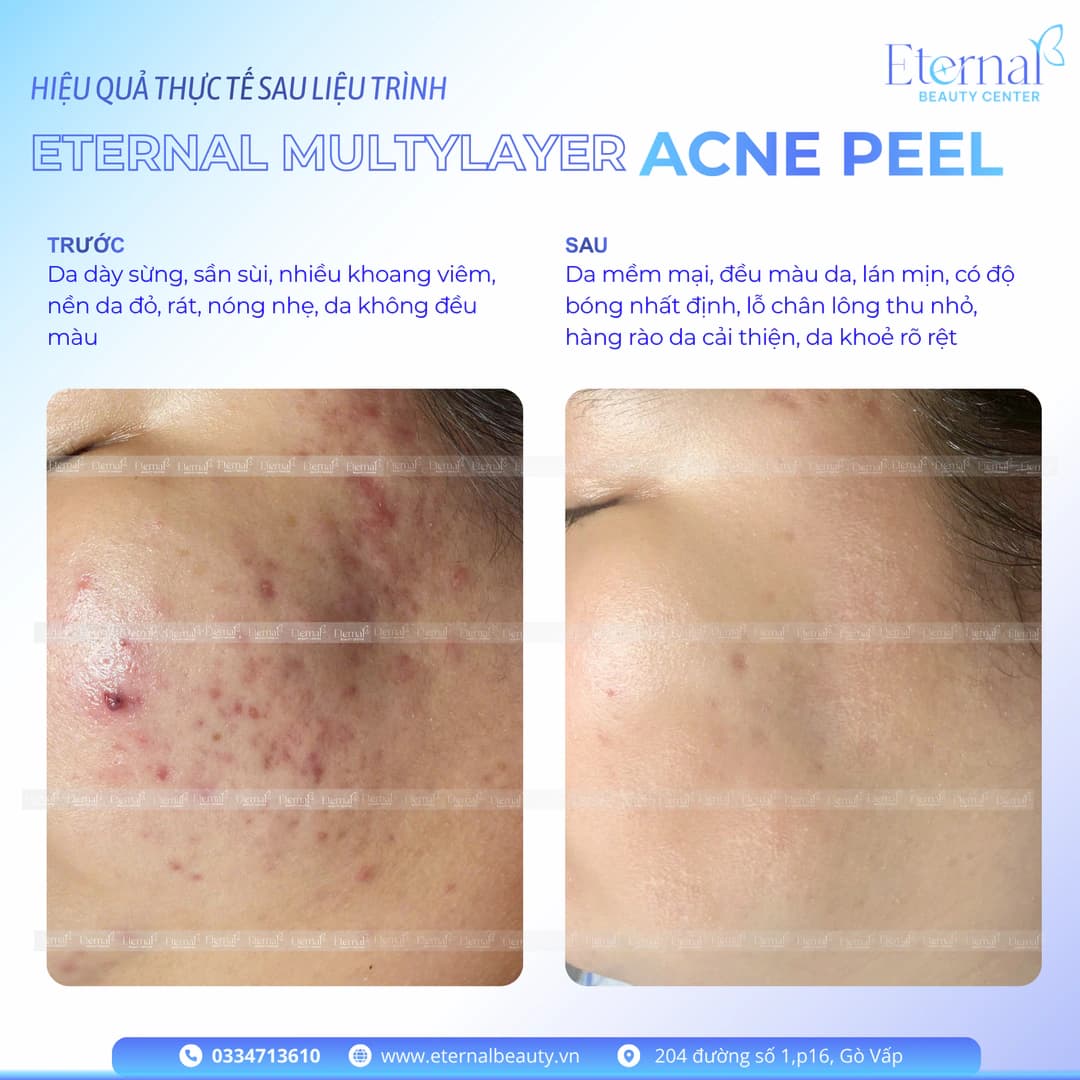
See more real acne treatment case files at Eternal.
The role of Acne Peel within an acne protocol
Acne Peel is an important piece, but not the whole protocol. At Eternal it is usually combined with other interventions within a complete acne treatment plan:
- A personalised at-home topical routine with retinoids, benzoyl peroxide or other suitable actives.
- Biolight biophotonic light to fight C. acnes and reduce surface inflammation.
- E-ACNE to deliver actives deep into inflamed lesions with a micro-point technique when needed.
- Long-pulsed 1064nm laser or DPL for persistent inflammatory acne.
- Hormonal or lifestyle adjustments when the root cause lies there.
The dermatologist at Eternal assesses each specific case to decide whether Acne Peel is a first step, an adjunct or a maintenance step. There is no universal formula, because every acne-prone skin has a different combination of causes.
Aftercare following a session
In the first 3 days, the skin needs gentle care to optimise recovery:
- Use a gentle cleanser with no exfoliating actives.
- Pause at-home retinoids, AHA and BHA exactly as the doctor instructs.
- Hydrate well with a barrier-repair product.
- Use broad-spectrum SPF 50+ and reapply every 2–3 hours when outdoors.
- Avoid steaming, hot showers and high-intensity exercise.
- Do not extract spots yourself and do not try new cosmetics.
The skin may flake slightly for 2 to 4 days after the peel. This is a normal and expected reaction, not a sign of damage. If prolonged redness, painful swelling or any unusual sign appears, contact Eternal Beauty Center right away for a check.
How Acne Peel at Eternal differs from an ordinary spa peel
| Criteria | Acne Peel at Eternal | Ordinary spa peel |
|---|---|---|
| Performed by | A dermatologist, directly | A technician |
| Pre-peel assessment | Doctor examination, acne classification | Rarely done, mostly sales advice |
| Active concentration | Personalised to each skin | One-size-fits-all formula |
| Number of steps | 17 medical-standard steps | Fewer, less rigorous |
| Handling complications | Doctor-led, with a protocol | No clear process |
| Protocol integration | Yes, combined multi-method | None |
This difference is not about marketing but about risk control and personalised treatment. With a potent active like a peel acid, one wrong parameter can cause a burn, post-inflammatory hyperpigmentation or prolonged irritation — which is why high-concentration chemical peels are legally classed as medical practice, not a purely cosmetic service.
Frequently asked questions about Acne Peel
Conclusion
Acne Peel is a multitasking method that acts on several acne mechanisms in a single session. With the right indication and a medical-standard protocol, it delivers clear improvement in comedonal and mild-to-moderate inflammatory acne, while also improving smoothness and overall skin tone.
That said, every acne-prone skin has several complex causes coexisting. For durable acne control and long-term protection against relapse, Acne Peel should sit within a combined, multi-method protocol rather than stand alone. At Eternal, every protocol is designed by a dermatologist, monitored through each stage and adjusted based on how your skin actually responds.
Book a consultation at Eternal
Every Eternal protocol begins with a 1:1 consultation with a dermatologist to assess your skin and design a plan that fits.
Book a consultationNot sure which treatment is right for you?
Book a free consultation with our specialist for a personalised skin analysis and treatment recommendation.